

Cooperation
Cooperation
Our partnerships are guided by the philosophy that "The ocean is vast because it admits all rivers," treating collaboration as an organic process of growth. Through open dialogue with enterprise and academic partners, we proactively invite and value divergent viewpoints. These diverse voices do not merely accumulate; they interact to catalyze new understandings and directions, collectively shaping our path forward. It is through this continuous, multi-driven evolution that we inject new momentum into the field of synthetic biology, jointly pointing toward a more forward-looking tomorrow.
Enterprise Exchange Events - The Bridge Connecting Innovation and the Market
Chengdu Meifute Environmental Industry Co., Ltd.
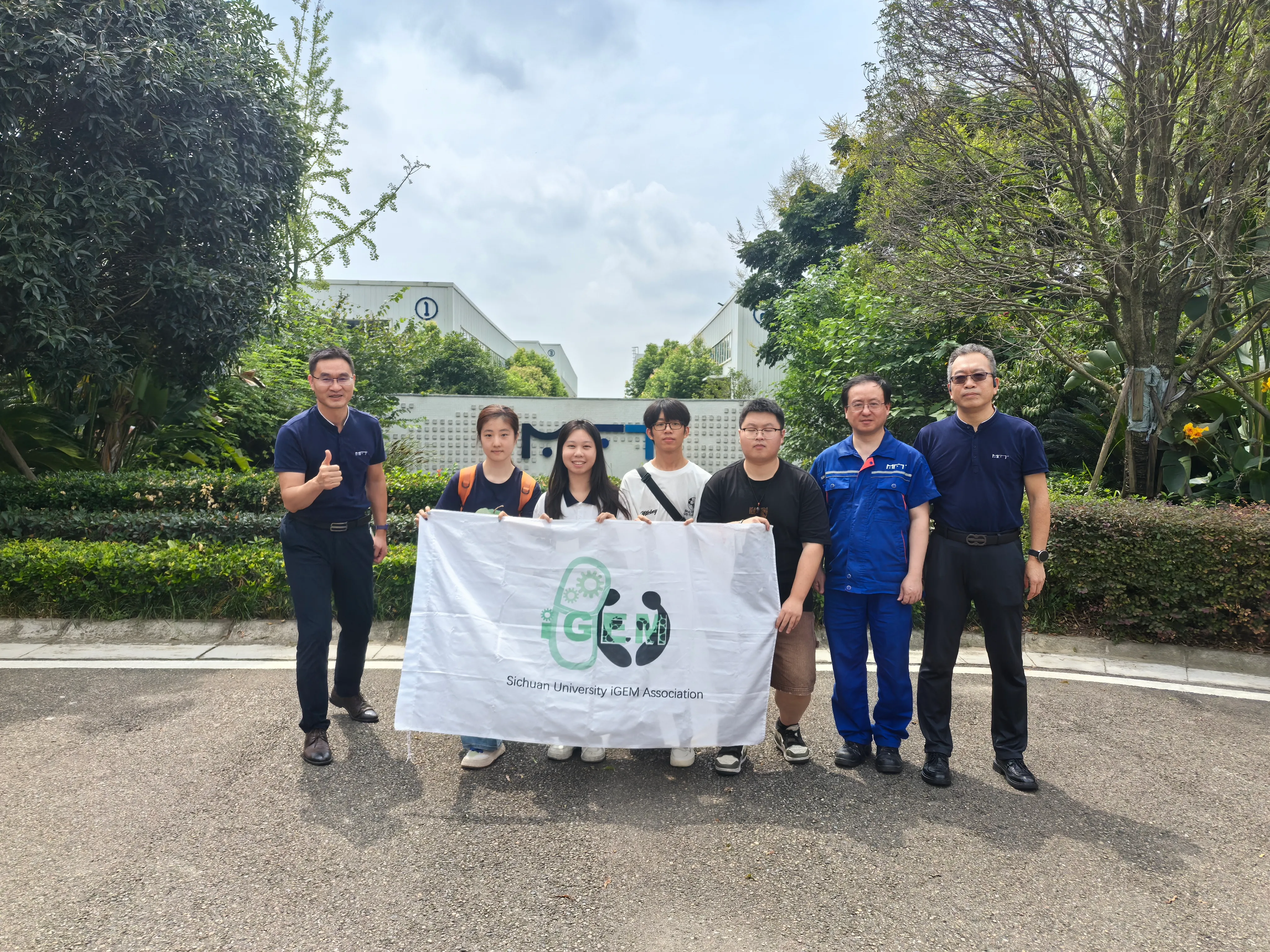
|
Figure 1. A group photo with experts from MFT experts
Purpose: To transition our iGEM project from a laboratory concept towards real-world application, we recognized the critical importance of insights from the industry. This visit aimed to establish a direct dialogue with Meifute(MFT) Environmental Industry Group, a leading enterprise in industrial wastewater treatment, seeking frontline, practical evaluation and guidance for our engineered bacteria immobilization technology, and exploring potential pathways for integrating basic research with industrial needs.
What We Did: MFT experts introduced their comprehensive solutions, from special membrane R&D to prefabricated wastewater plants, revealing the forefront of industrial wastewater treatment. We presented our TasAnchor immobilization platform. The technical team provided crucial advice on proof of principle, cost-benefit analysis, and target pollutant selection, deepening our understanding of the project's practical aspects. Experts suggested we focus on Emerging Contaminants(ECs) or critical national issues like "black and odorous water body remediation," recommending small-scale demonstrations for proof-of-concept, which provided a clear direction forward.
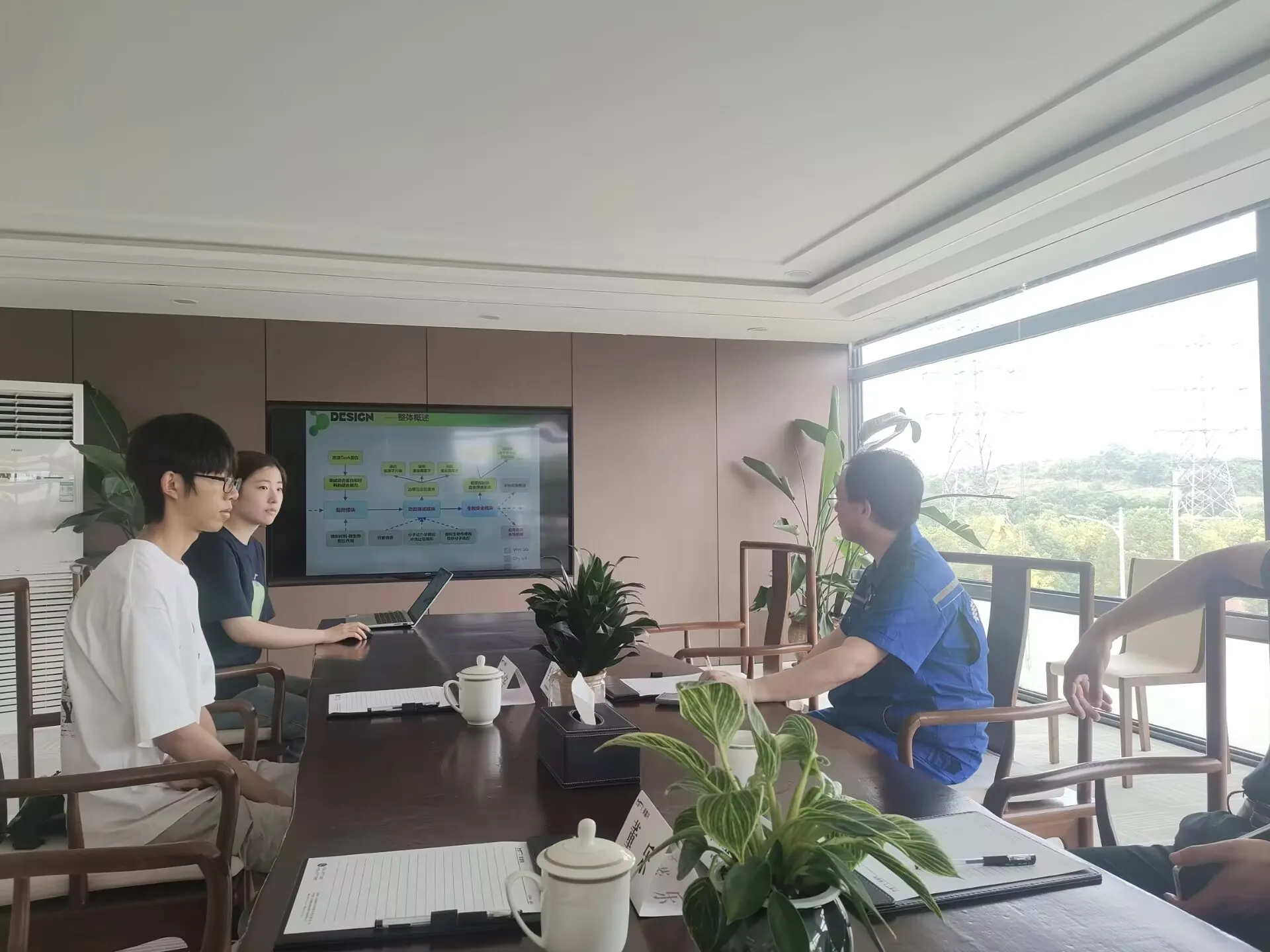
|
Figure 2. We had an in-depth discussion on the topic with the experts
Impact & Reflection: The dialogue connected academic "possibility" with industrial "necessity," helping us recalibrate the balance between innovation and practicality. We gained a crucial understanding that technological innovation must be not only scientifically sound but also cost-effective and integrable into existing processes—a core takeaway from this exchange. This visit planted seeds for potential future collaboration, inspiring us to refine our research with a broader, more application-oriented vision.
Xihua University - Sichuan Qinghe Technology Co., Ltd.
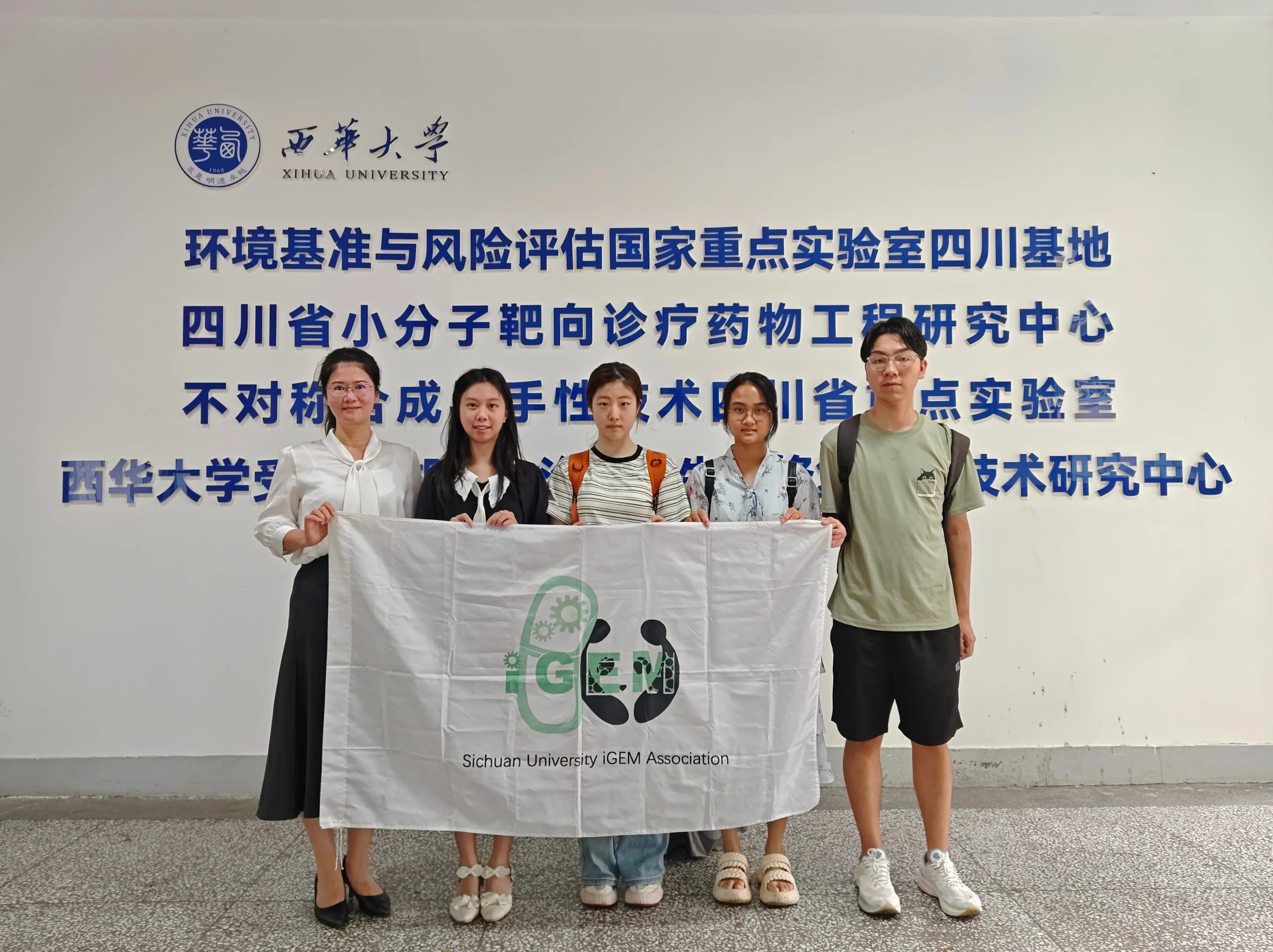
|
Figure 3. A group photo with the team at Qinghe Tech
Purpose: To gain a deeper understanding of practical engineering in water environment remediation, we visited the Qinghe Enterprise Lab at Xihua University. We aimed to learn about mainstream microbial agent production processes and ecological restoration technologies, while discussing the practical feasibility of our iGEM project's engineered bacteria, seeking a practical perspective for industry-academia integration.
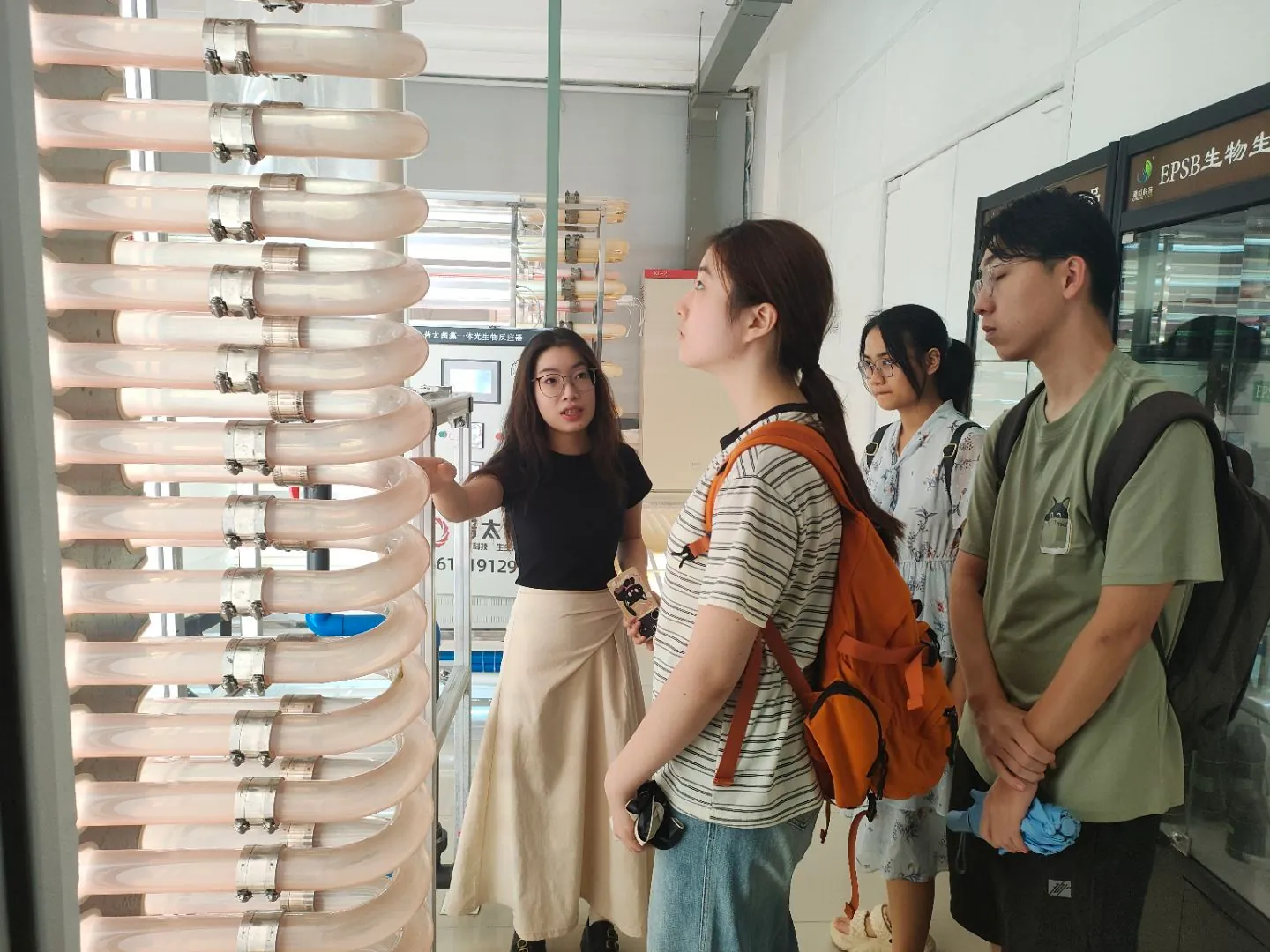
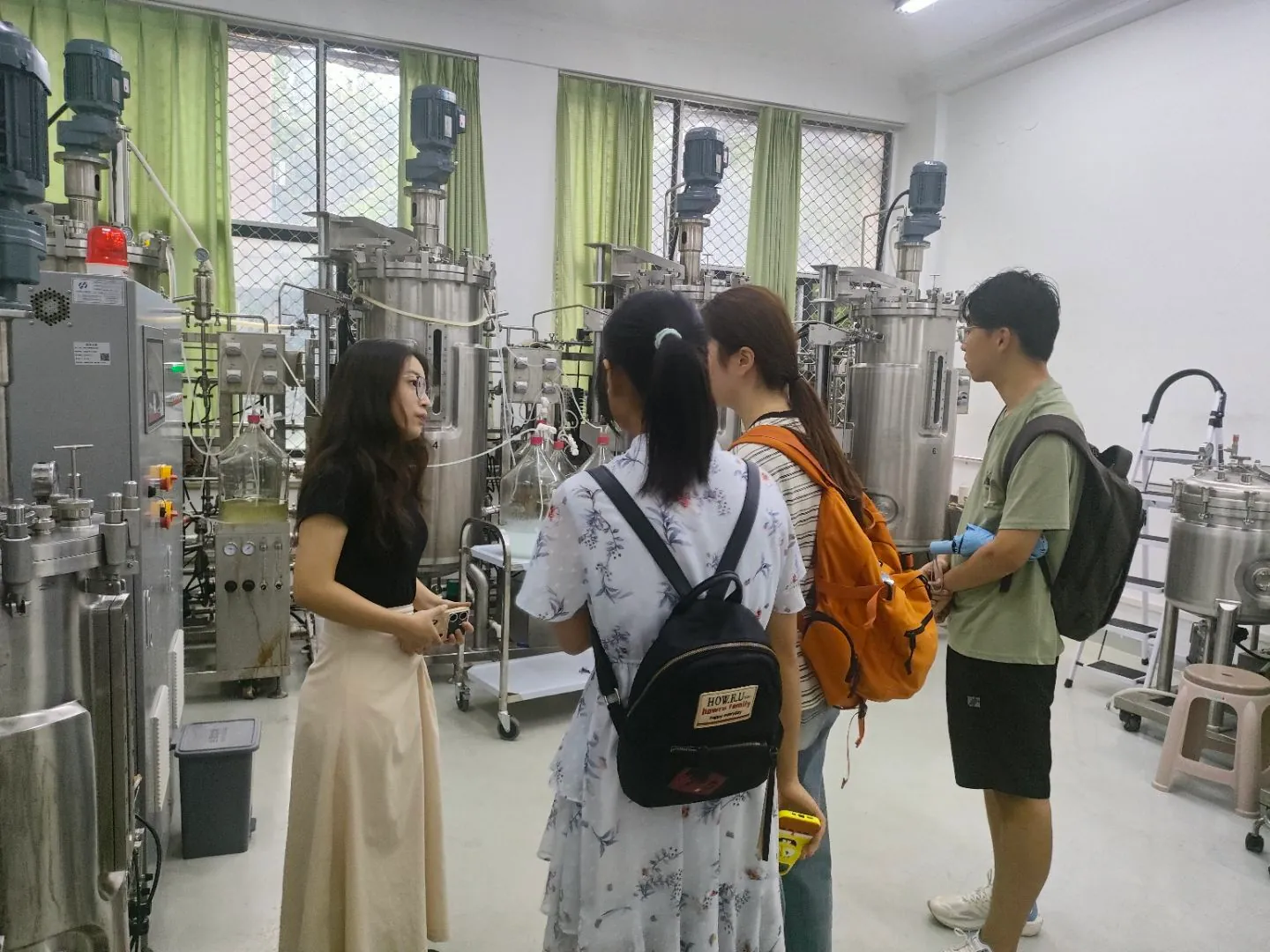
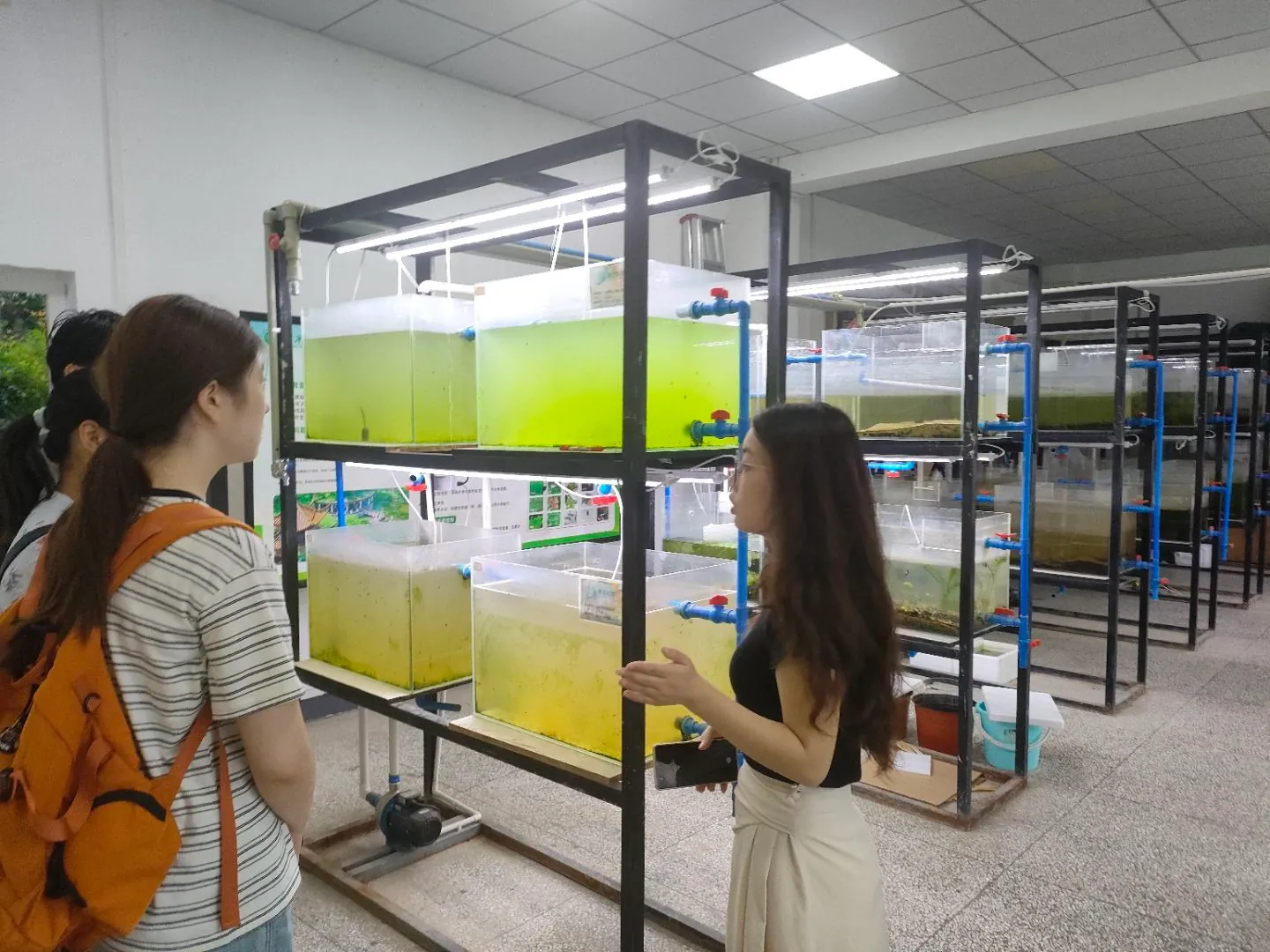
What We Did: Experts explained the complete R&D chain, from strain screening and agent preparation to pilot-scale production, showcasing key equipment and environmental simulation tools. This demonstrated a characteristic "lab-pilot-field" integrated approach. We presented our engineered Bacillus subtilis immobilization strategy. Qinghe experts provided crucial advice on core issues like target pollutant selection, precise application scenario definition, and biosafety control. They pointed out that competing on cost with traditional carrier modification is not a viable path, advising us to focus on functional innovation.
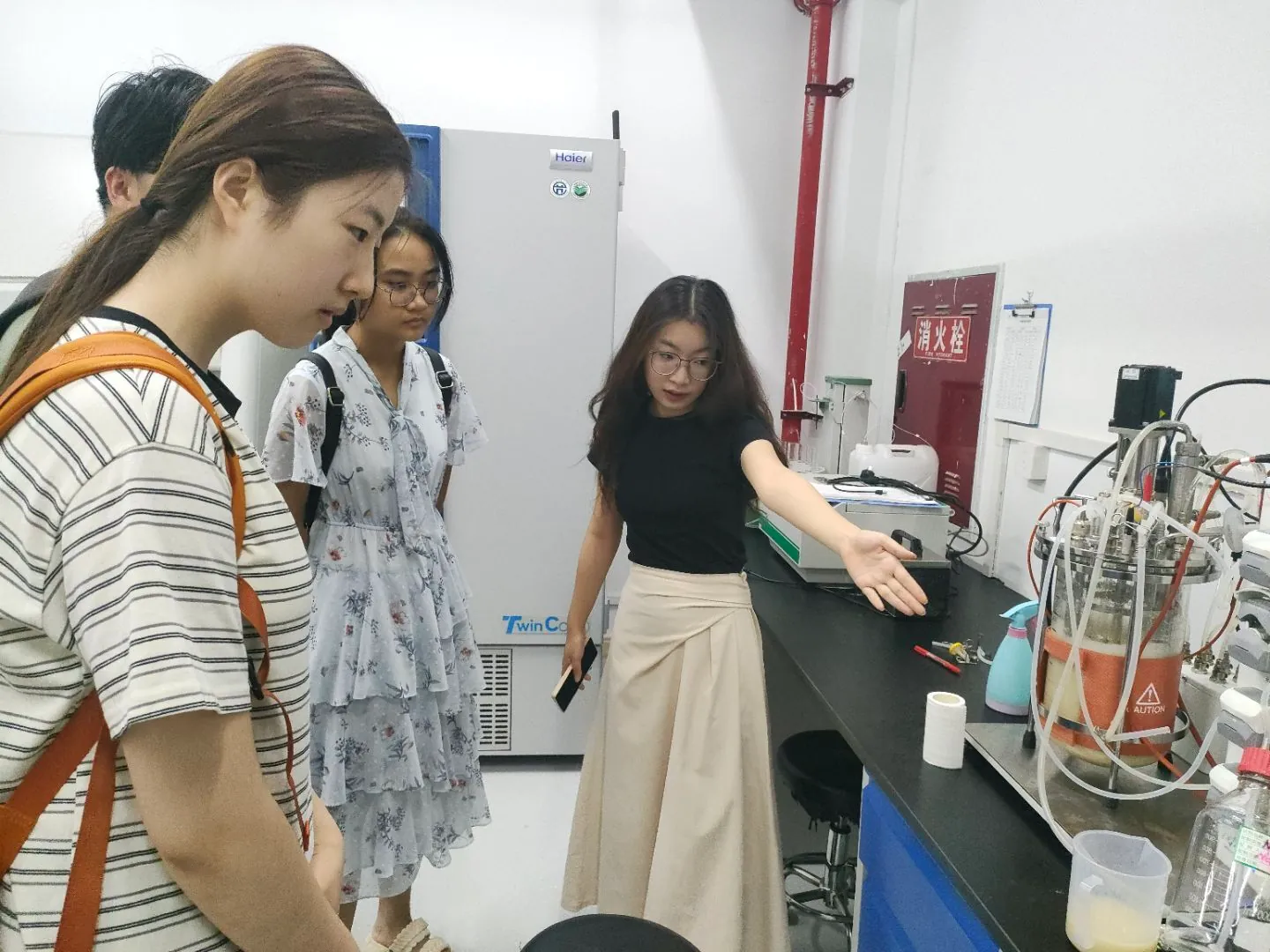
|
Figure 4. Qinghe staff showed us their bench and pilot-scale labs.
Impact & Reflection: Experts indicated that heavy metal treatment is currently dominated by chemical methods, prompting us to critically evaluate the cost. Their detailed explanation of common industry practices regarding agent dosing, activity monitoring, and system recovery infused our design with essential engineering thinking. Regarding the environmental release of genetically engineered bacteria, experts clearly highlighted the existing policy barriers and public acceptance challenges, emphasizing that biosafety is an absolute prerequisite. This urged us to more seriously consider the boundaries and ethical responsibilities of synthetic biology applications. This dialogue helped us move beyond the mindset of "cost competition" and instead consider how to create unique value through the distinctive functions of engineered bacteria, providing a clearer direction for the project's future development.
Government Interview: A Dialogue on Policy and Practice with Water Authorities
Water Ecological Environment Division of Chengdu Municipal Government
|
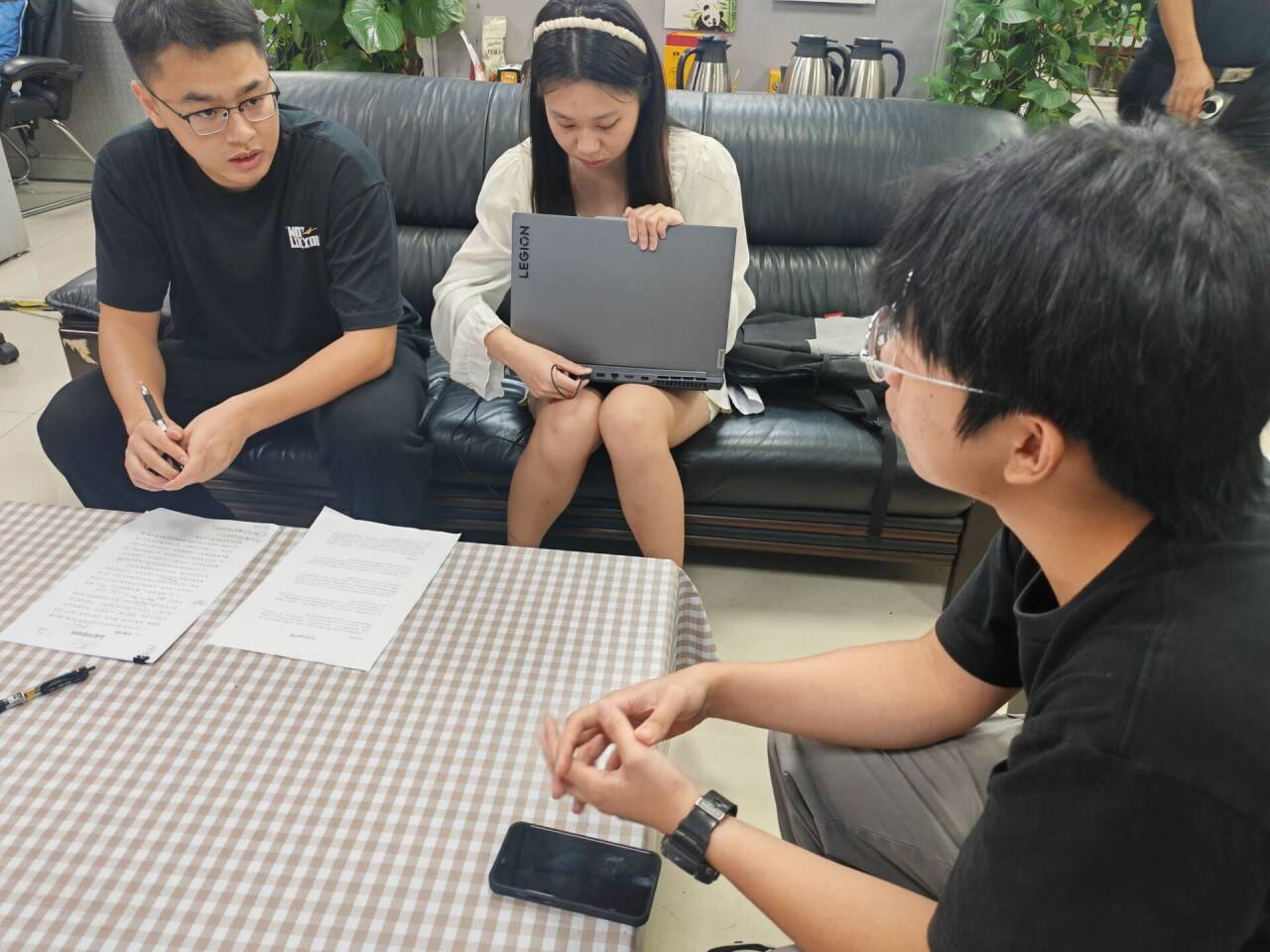
Figure 5. Students are noting the expert's key points.
Purpose: To precisely position the application value and compliance pathway of our TasAnchor within the current water environment management system, we interviewed experts from the Sichuan Provincial Department of Ecology and Environment. We aimed to gain in-depth insights into water quality regulatory policies, wastewater treatment plant operations, and future assessment directions, seeking authoritative policy guidance for the practical application of our engineered bacteria technology.
What We Did: The expert detailed the core assessment indicators and monitoring systems, clarifying that heavy metals are not currently a routine regulatory focus for surface water. They also introduced the upcoming "Water Ecology Assessment" policy, suggesting potential entry points for biotechnology within its new indicators like biological metrics and pollution intensity during flood seasons. Regarding our microbial approach for cadmium removal, the expert objectively analyzed its competitive position against mature chemical and electrodeposition methods. It was advised to avoid direct competition in traditional areas and instead focus on challenging, dispersed scenarios like "agricultural non-point source pollution" and "stormwater overflow," which align with the new policy direction.
Impact & Reflection: This dialogue prompted a clear realization that technological application must be closely aligned with policy direction and practical needs. The expert's advice directly led us to re-evaluate and explore the unique value of our engineered bacteria in emerging scenarios like "controlling pollution intensity during floods" rather than engaging in inefficient competition in traditional heavy metal treatment. The explanations regarding monitoring frequency, microbial standards, and emergency measures highlighted the crucial importance of regulatory compliance and system integration for translating a technology from the lab to the field, moving beyond pure technical optimization. This interview provided not only valuable policy insights but also established a communication channel with the regulatory authorities. The expert's interpretation of the new water ecology policy infused our project with a forward-looking perspective, helping us better align synthetic biology innovation with the macro needs of national environmental governance.
Department of Urban Water Supply and Drainage Engineering in Seattle, USA
|
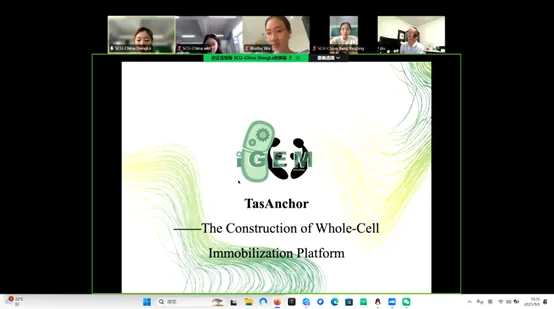
Figure 6. An online meeting with municipal officials in US
Purpose: To broaden the international perspective of our iGEM project and gain insights into the application prospects of engineered bacteria under different regulatory frameworks, we held an online meeting with an expert from Seattle's municipal government. This aimed to compare Sino-U.S. wastewater policy differences and explore feasible pathways for our technology within Western regulatory systems.
What We Did: The expert confirmed that microbial washout is a common industry challenge and shared engineering experiences in maintaining microbial activity. They explained that the U.S. system primarily relies on BOD/COD as core indicators. The expert showed particular concern for biosafety, affirming our designed suicide switch and emphasizing that any microbial technology must establish "multiple-layer protection systems," aligning with stringent U.S. technical approval standards. We learned about the decentralized state-level management system in the U.S., where approval for genetically engineered microorganisms is extremely cautious. We also gained insights into the U.S. regulatory approach, which combines pre-treatment requirements and irregular spot checks.
Impact & Reflection: The expert's significant emphasis on safety reinforced our understanding that biosafety is the cornerstone of any technological application, regardless of the policy environment, and our protective systems must withstand rigorous validation. By comparing Chinese and U.S. regulatory logics, we recognized that the deployment of engineered bacteria must fully consider local policy characteristics. The state-based approval system and the regulatory model emphasizing corporate self-discipline in the U.S. provide crucial reference points for potential future international collaboration. The expert's insights on maintaining microbial activity and specific measures like stormwater separation and storage facilities offer valuable lessons for adapting our technology to different infrastructural conditions.