As all research projects, ExoSPY followed its own development; initial ideas changed according to encountered learning and difficulties, but also to people we met outside the lab. All these people are recognized as experts in their field. We met them to assess our project's viability and make it grow according to the expectations and constraints of actors involved. Thanks to their opinion, ExoSPY became what it is today.
Research's advices
Serge Cadeias
Research Director at the Laboratory of Chemistry and Biology of Metals. His work focuses on the effects of ionizing radiation on the immune system.
CEA (Commissariat de l'Energie Atomique) Grenoble
Key Contributions
- Helped us reflect on the most suitable method for exosome isolation.
- Provided access to ISEV (International Society for Extracellular Vesicles) documentation for extracellular vesicle studies.
- Suggested using pancreatic cell lines and checking beforehand whether CLDN-4 is expressed on their surface.
- Shared contacts of two key contributors to our project: Flora Clément and Aya-Meryem Sebdaoui.
Flora Clément
Member of the BIOMICS team at the BGE Laboratory (Biosciences and Bioengineering for Health), which develops a pancreas-on-a-chip model to study early stages of tumor initiation. Their approach combines microfabrication techniques with 3D cultures of cells derived from patients and donors.
CEA (Commissariat de l'Energie Atomique) Grenoble
Key Contributions
- Donated dry pellets of pancreatic cells, allowing us to perform experiments.
- Provided valuable guidance on pancreatic cell culture, cell lysis, and SDS-PAGE / Western Blot protocols.
- Gave feedback on ExoSPY, highlighting the importance of improving specificity when targeting tight junctions, a promising aspect to further develop beyond iGEM.
- Connected us with Gaël Roth and the "Espoir Isère contre le Cancer" association.
Marie-Pierre Rols
Researcher at the IPBS, with extensive expertise in plasma membrane permeabilization by electroporation in eukaryotic cells.
IPBS (Institut de Pharmacologie et de Biologie Structurale) Toulouse
Key Contributions
- Helped us understand the physics of electroporation, guided the theoretical calculations for determining the appropriate electric field values, and advised on electroporation buffer preparation.
- Informed us that electroporation of extracellular vesicles (EVs) remains at a research stage. Based on her insights, we tested new parameters to validate this step within our protocols.
Carlos Contreras
PhD in the Bacterial Pathogenesis team, he works on protein-protein interaction and crystal structure.
IBS (Institut de Biologie Structurale) Grenoble
Key Contributions
- He helped us understand how to use AlphaFold and PyMOL to model the GoldenEye protein.
- He took the time to demonstrate how these tools work, and the databases they rely on in his daily work in crystallography.
- Guide-d us in understanding and using PyMOL and AlphaFold for protein modeling.
Aya-Meryem Sebadoui
Research Engineer at the Laboratory of Chemistry and Biology of Metals (LCBM). She works on the exploratory project DERIVE, which aims to identify gene biomarkers of radiation exposure within extracellular vesicles (EVs).
CEA (Commissariat de l'Energie Atomique) Grenoble
Key Contributions
- Helped us reflect on different exosome isolation methods, leading us to choose ultracentrifugation.
- Advised us on long-term storage of EVs.
- Highlighted that most EV studies traditionally focus on analyzing EVs from human samples, and emphasized the innovative potential of our project, which proposes engineering EVs for therapeutic injection, offering a new approach for diagnostics and treatment.
Engineer's advices
Pierre Caullet
Member of the BIOMICS team at the BGE Laboratory (Biosciences and Bioengineering for Health), which develops a pancreas-on-a-chip model to study early stages of tumor initiation. Their approach combines microfabrication techniques with 3D cultures of cells derived from patients and donors. Pierre's expertise lies in organ-on-chip systems integrated into microfluidic devices.
CEA (Commissariat de l'Energie Atomique) Grenoble
Key Contributions
- Discussed with us several times about implementing a final proof of concept using microfluidic channels.
- Shared numerous resources and valuable expertise, which significantly enhanced our understanding of microfluidics and lab-on-chip design.
Dr. Sébastien Rigollet
One of the people who has supported us the most and who helped us move forward with this project is Sébastien Rigollet. A former biomedical engineering student at Phelma Grenoble INP, he recently obtained his PhD and now works at the Grenoble Neuroscience Institute as a postdoctoral researcher. From the beginning, he helped us with his own experience - he took part of the iGEM Grenoble 2020 team through the project PyoBusters.
Grenoble Institute of Neurosciences
- He guided us on the engineering side by telling us whether what we wanted to do was feasible, or whether it was too difficult or too time-consuming. In particular, for the MRI experiments, i.e., the diagnostic part, he gave us his expert opinion and numerous pieces of advice, as well as bibliographic sources. He also put us in touch with Sarvenaz Keshmiri.
- We have always listened to Sébastien, and we are very grateful to him for his support and his highly relevant scientific advice.
Sarvenaz Keshmiri
Specialist in X-ray irradiation, she supported us in the therapeutic aspect of our project.
Grenoble Institute of Neurosciences
Key Contributions
- Provided scientific articles to guide our choice of gold-based molecules.
- Helped us to design irradiation protocols, including determining the appropriate Gy doses for our samples.
- Enabled us to perform irradiation experiments once the preparations were completed.
Clinical and industrial opinion
bioMérieux
Industrial Partner - Biotechnology Company
Grenoble bioMérieux Campus
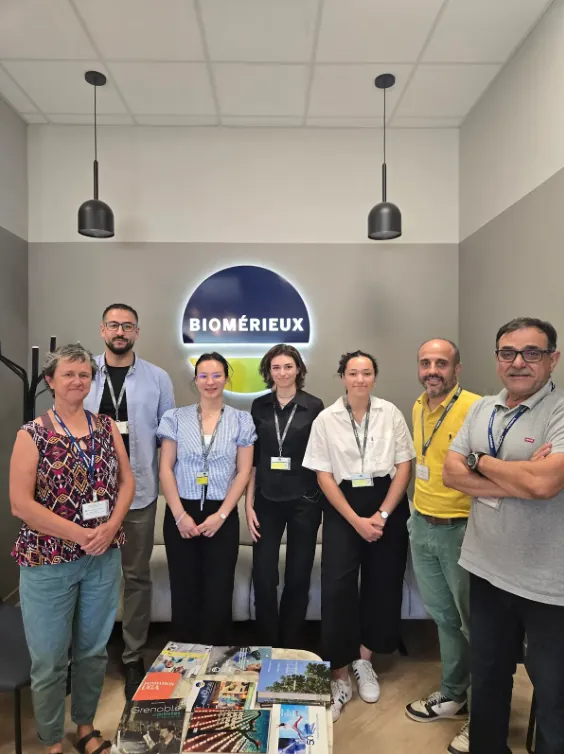
We met with a team of experts from bioMérieux Grenoble: Ali Laayoun, Christophe Aulard, Frédéric Pinston, Karen Brengel-Pesce, Alain Laurent, Carole Vachon, Damien Forget, and Laurent Mesta.
We visited their facilities to discuss the ExoSPY solution and gain scientific feedback from an industrial perspective.
Key takeaways from the discussion
- Explored the potential of a personalized medicine approach, where a patient's own cells could be used to produce autologous modified EVs, helping to further reduce immunogenicity risks.
- Suggested testing our proof of concept on organoids-on-chips, which we had already considered with Pierre Caullet; however, this would require more time and resources.
- Emphasized the market advantage of a theranostic solution, enabling in vivo diagnosis combined with therapy.
- Stressed the need to clearly define a target market and patient group, since it's not feasible to propose ExoSPY to the general population — MRI screening for everyone is unrealistic, particularly in France.
- Insisted on the importance of fully characterizing EVs before injection into patients, highlighting the need for rigorous quality control procedures.
Dr. Gaël Roth
Clinical oncologist
Grenoble University Hospital
Key Contributions
- He helped us identify our target audience and provided insight into current diagnostic and treatment methods as well as risk factors for pancreatic cancer.
- He guided us toward developing a theranostic (therapy + diagnostic) approach, rather than a purely diagnostic one, in order to make our project truly innovative, even though early diagnosis alone would already be a major advance.
- Highlighted a key challenge: PDAC (pancreatic ductal adenocarcinoma) is poorly vascularized in early stages, meaning that EVs (extracellular vesicles) might have difficulty reaching precancerous lesions via intravenous injection.
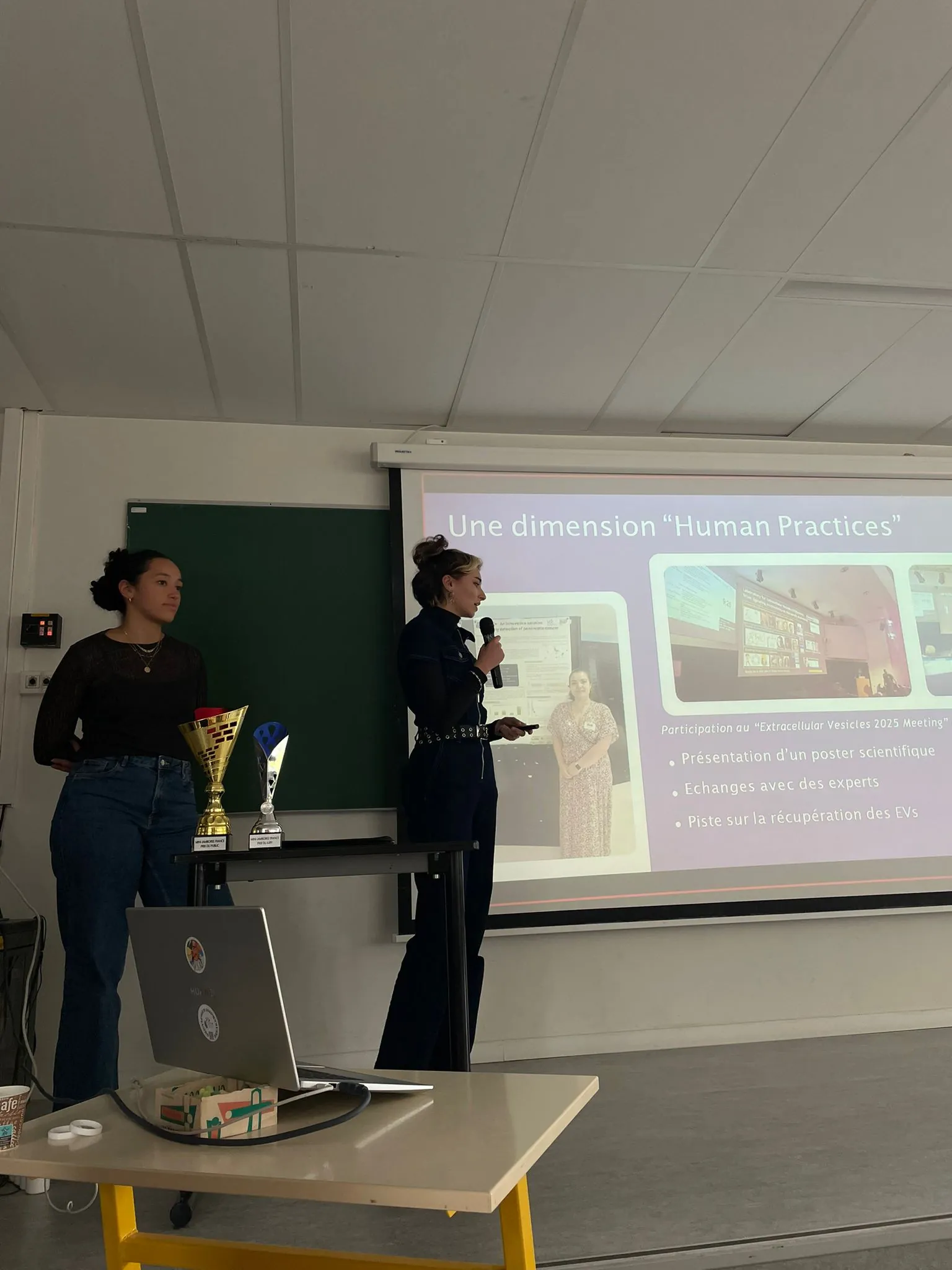
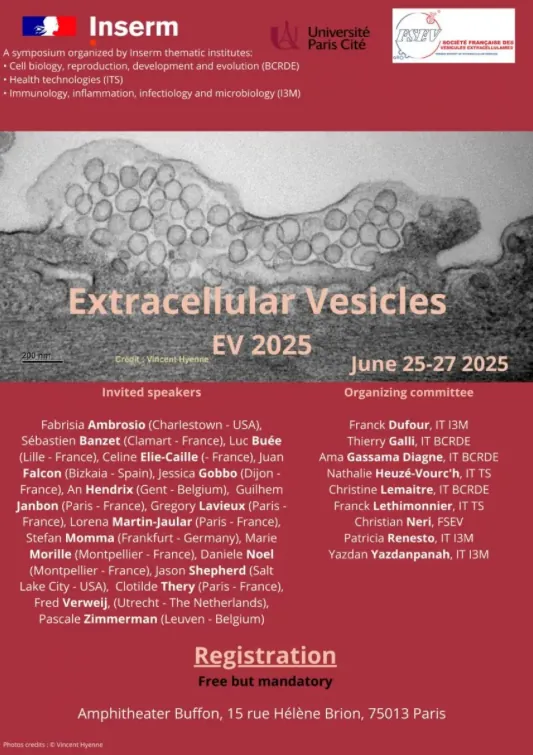
International Congress "Extracellular Vesicles" - Paris (June 25-27, 2025)
Paris Congress
Scientific Conference
Paris, France
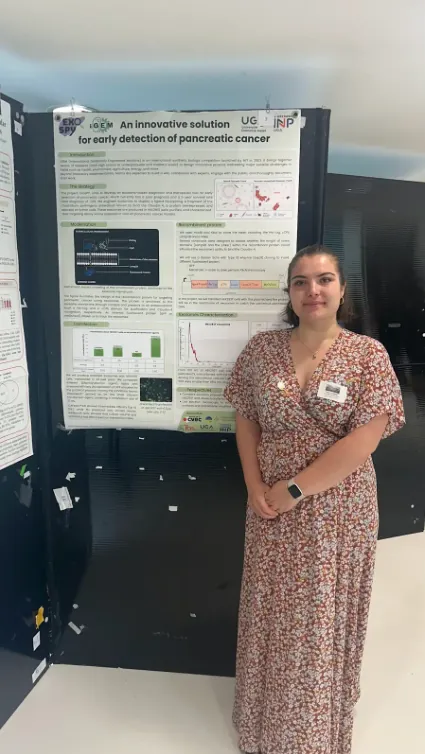
We had the opportunity to attend the International Congress on Extracellular Vesicles, organized by the French Society for Extracellular Vesicles (FSEV), in Paris from June 25 to 27, 2025. This was an invaluable experience that allowed us to present our scientific poster and receive constructive feedback from experienced EV researchers.
Key insights from the congress
- Confirmation of the two most reliable exosome isolation methods: density gradient ultracentrifugation and size-exclusion chromatography. We chose the first method, which was further validated by several researchers.
- Importance of using the correct EV nomenclature — this is why we sometimes use the term "exosomes" interchangeably with "EVs" (extracellular vesicles) in our communications.
- Several scientists validated the relevance of our project, a theranostic solution for PDAC (pancreatic ductal adenocarcinoma) — while raising important questions regarding EV regulation and patient perception.
- Many participants expressed strong support for our initiative and commended our efforts as students developing such an ambitious and innovative project.
Patient Perspective
Discussions with the "Espoir Pancréas" Association
Our exchanges with "Espoir Pancréas" took place in February, at the very beginning of the ExoSPY project, when we didn't even have a name or logo yet! These discussions helped us refine our objectives, focusing on early diagnosis and gaining a clearer understanding of PDAC risk factors.
General Assembly - "Espoire Isère contre le Cancer"
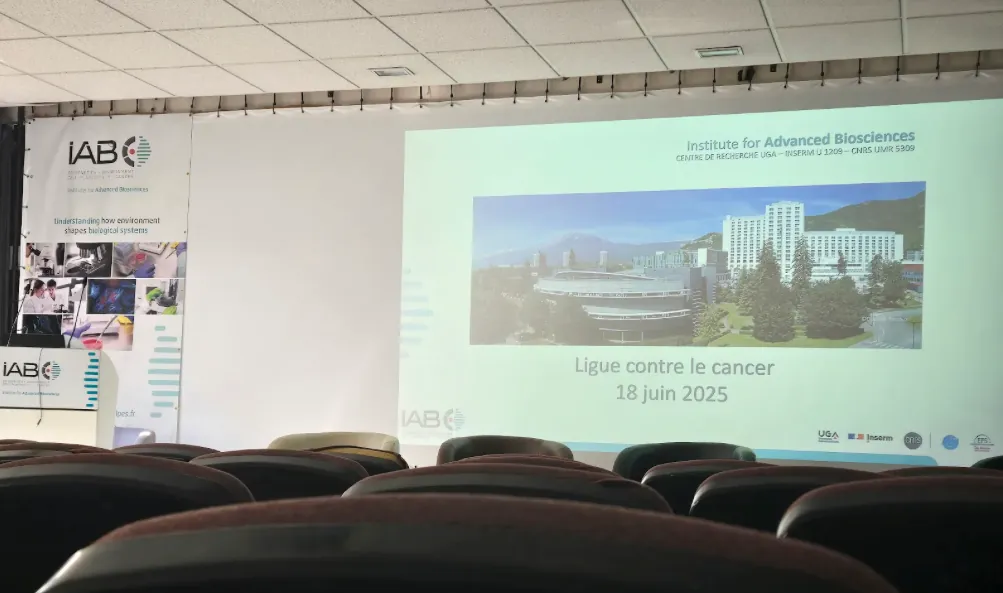
We were invited to attend the General Assembly of the "Espoir Isère contre le Cancer" association.
Key Contributions
- This gave us insight into the challenges faced by cancer patients within the Isère region, and a broader understanding of local patient needs and expectations.
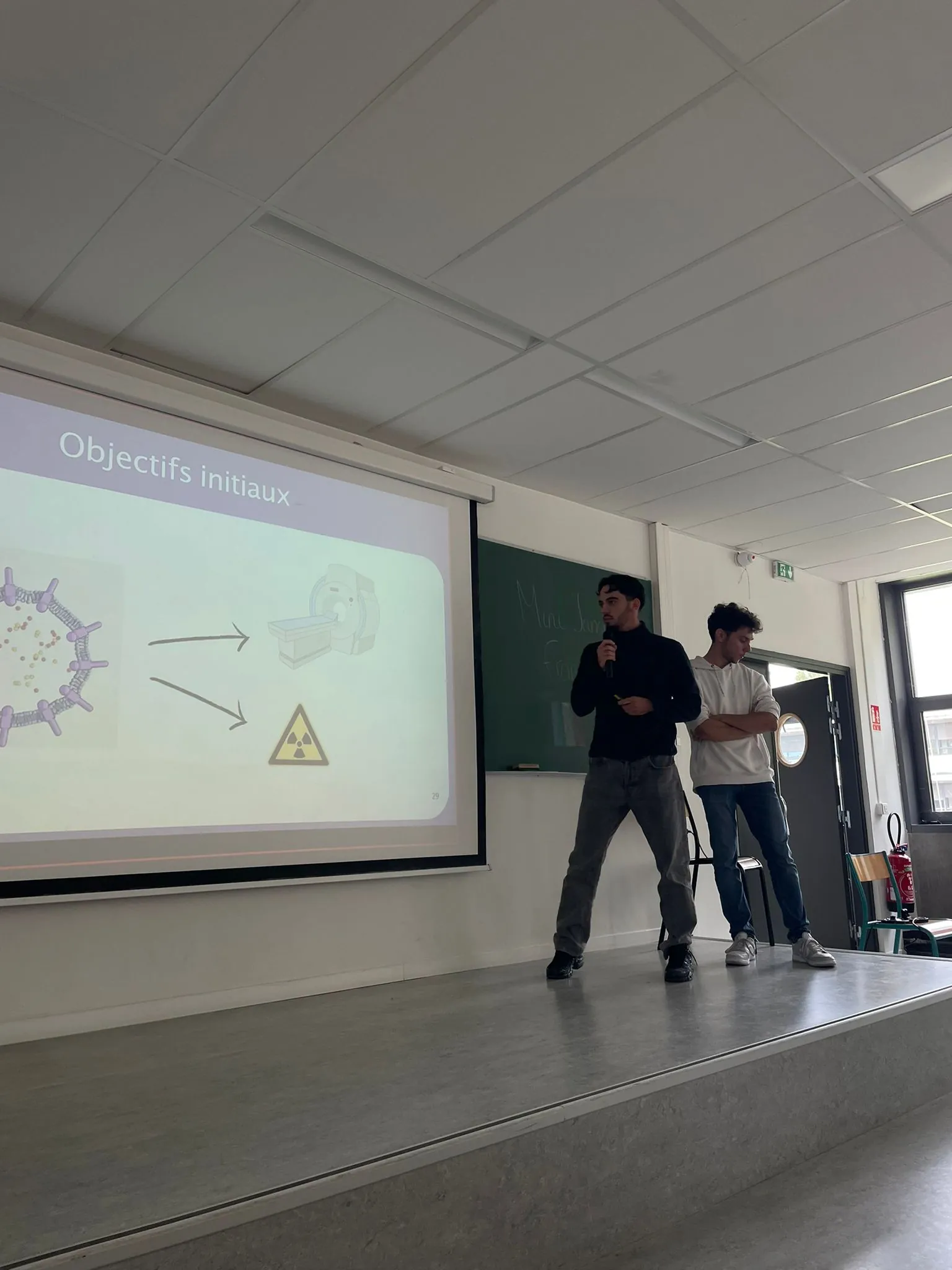
Mini Jamboree France
Mini Jamboree France
iGEM French Teams Meeting
Lyon, France
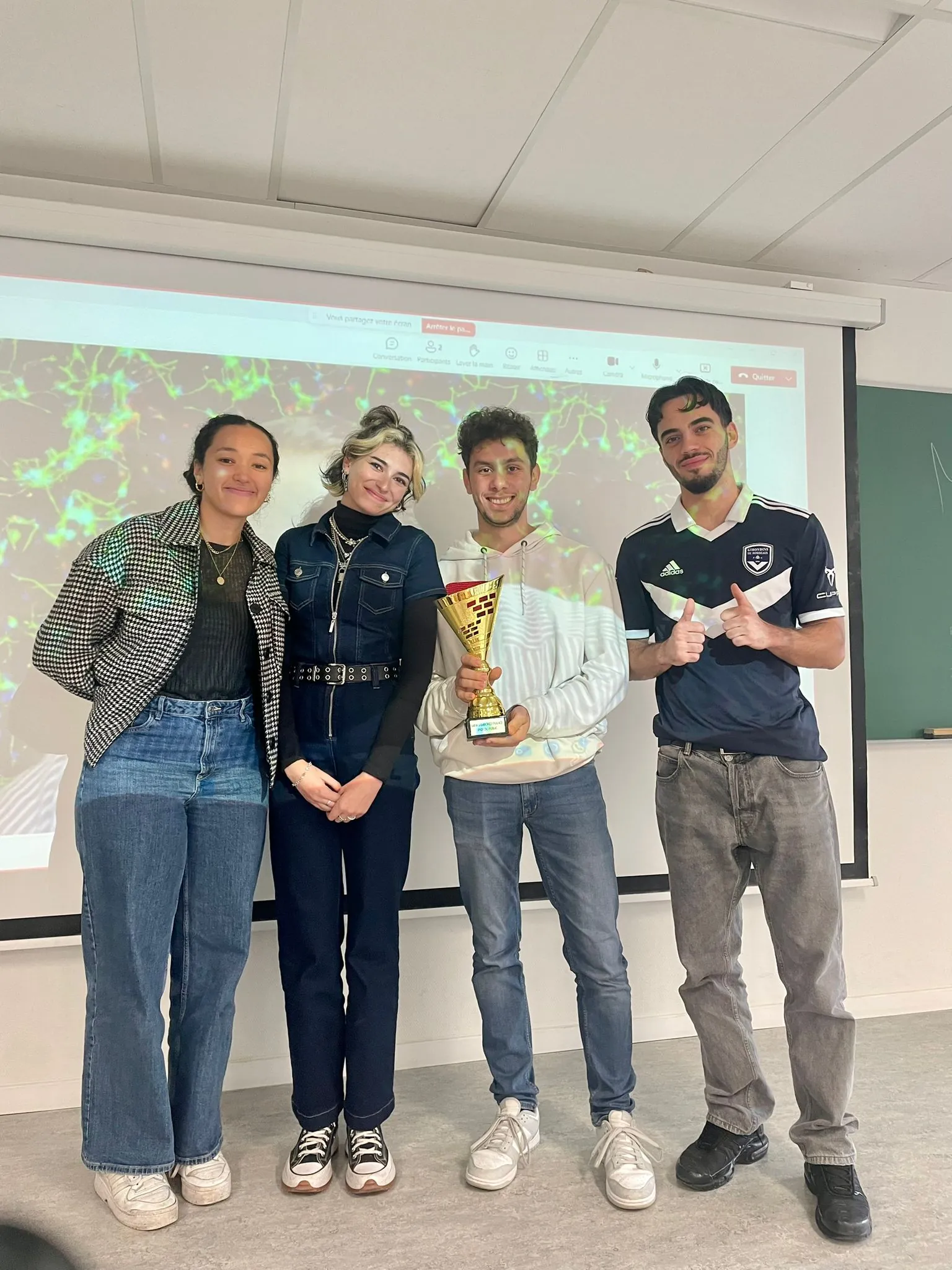
The Mini Jamboree France took place on September 13, 2025, in Lyon, organized by iGEM Lyon. It was a unique opportunity to exchange ideas, meet new people, and showcase ExoSPY differently.
Key insights from the event
- We loved sharing our experience, acting as judges for other iGEM teams, receiving valuable feedback, and learning from others, all while having great team-building fun! It was very interesting to hear the comments from all the teams and the judges.
- We particularly appreciated the insider tips on how to detect gadolinium and gold nanoparticles in EVs: these are new techniques that have just come onto the market and could be of interest to us.
- A big thank you to iGEM Lyon for organizing, and to iGEM Aix-Marseille, iGEM IONIS Paris, iGEM Sorbonne Paris, and iGEM Evry-Paris-Saclay for attending.
- We are extremely grateful to have won the Public Award!
- Special thanks to Yasmine Amarani and Youssef for serving as judges.