To establish a robust secretion system in Chlamydomonas reinhardtii, we designed multiple constructs with different secretion signals.
This included one construct without a secretion signal to test whether cytosolic expression of scFvs was possible.

By comparing these variants, we planned to identify which sequences promote the most efficient secretion in Chlamydomonas.

In the next step, we assembled our constructs using the MoClo system and integrated different tags. These tags allowed us to detect, purify, or process our proteins more efficiently.

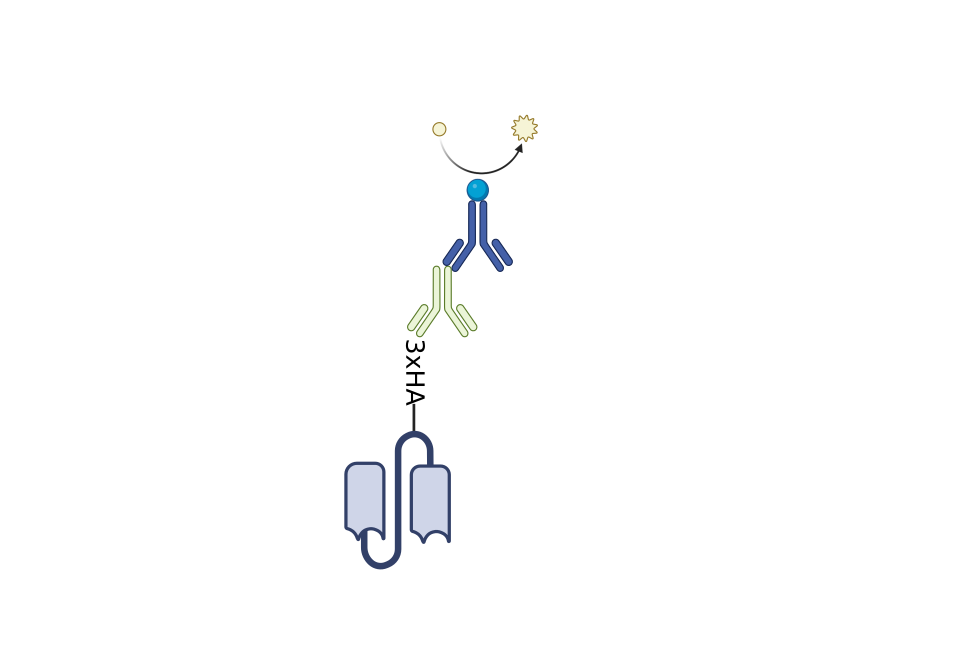
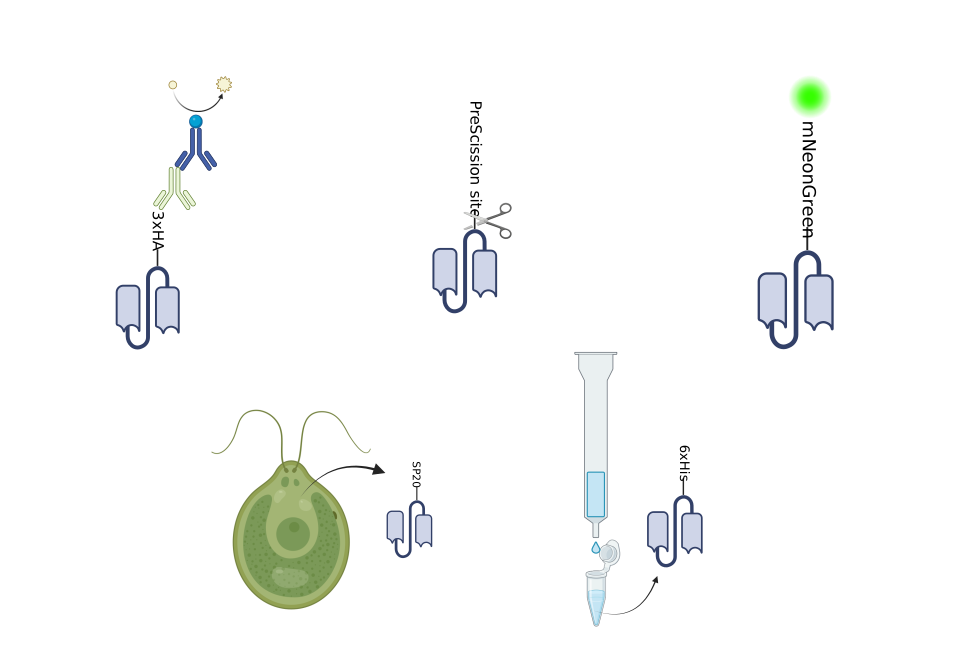
We added a 3×HA tag to enable easy detection of our constructs in Western blot analysis.
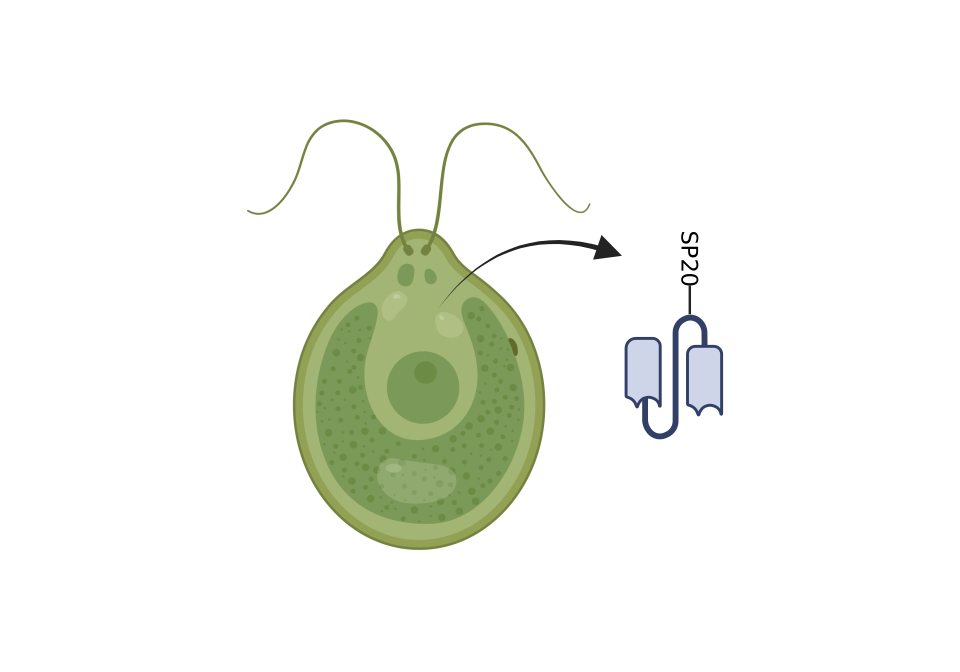
SP20 repeats were used to improve secretion efficiency and stability of the expressed scFvs.
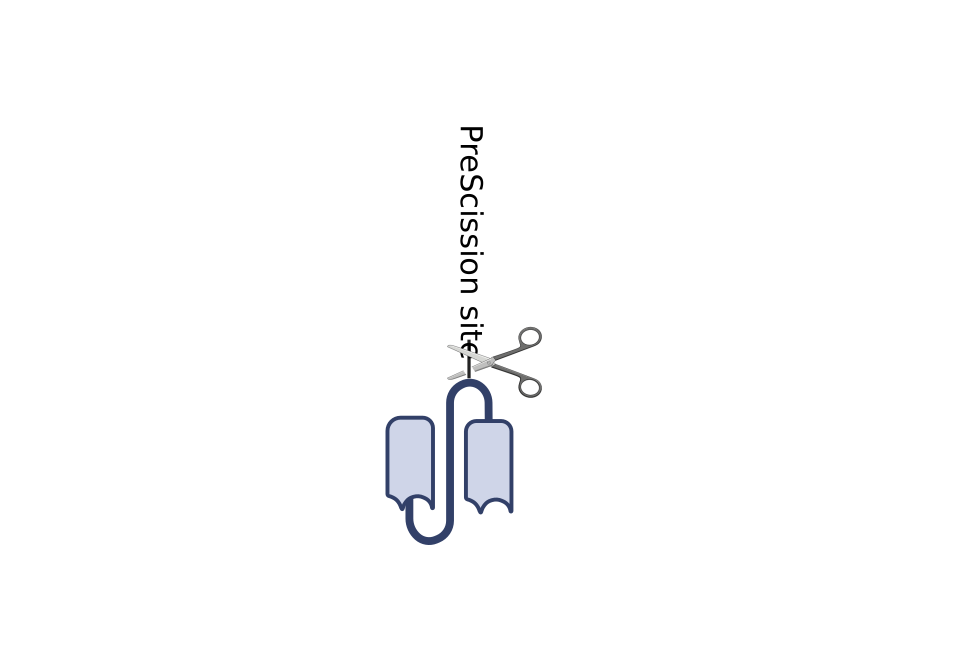
We included a PreScission protease site to allow cleavage of tags after purification, keeping the protein flexible for downstream applications.
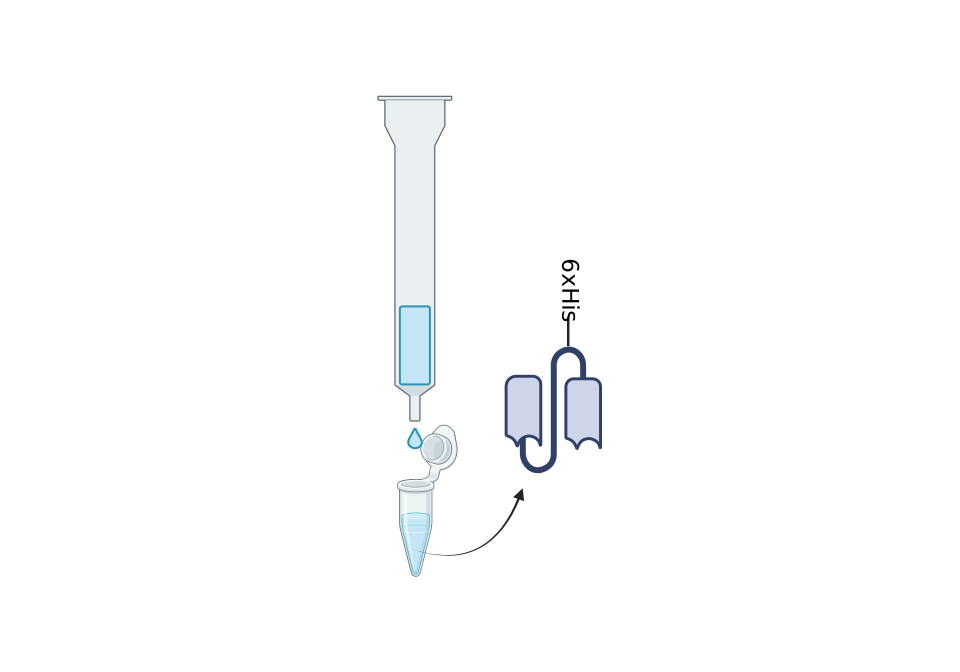
A 6×His tag was included in constructs to enable affinity purification using Ni-NTA chromatography.
We also tested the fluorescent protein mNeonGreen as a reporter tag for visualization of expression.

By combining these different tags in our MoClo constructs, we created a modular system that enabled reliable detection, efficient purification, and greater flexibility for future applications.
We validated our designs experimentally:
Proof of concept:
Fluorescence microscopy confirmed expression and localization of scFvs in Chlamydomonas.
Proof of functionality:
Western blot pulldown-interaction assays demonstrated that the scFvs expressed and secreted by Chlamydomonas retained their specific binding activity.
From these results we learned that our system
is
not limited
to a single antibody. In addition to the Cetuximab
scFv,
we
successfully expressed and secreted other scFvs,
such as
one
derived from Trastuzumab targeting HER2.

Moreover, we showed that secretion works not
only
in patented
laboratory strains but also in non-patented
Chlamydomonas
strains.

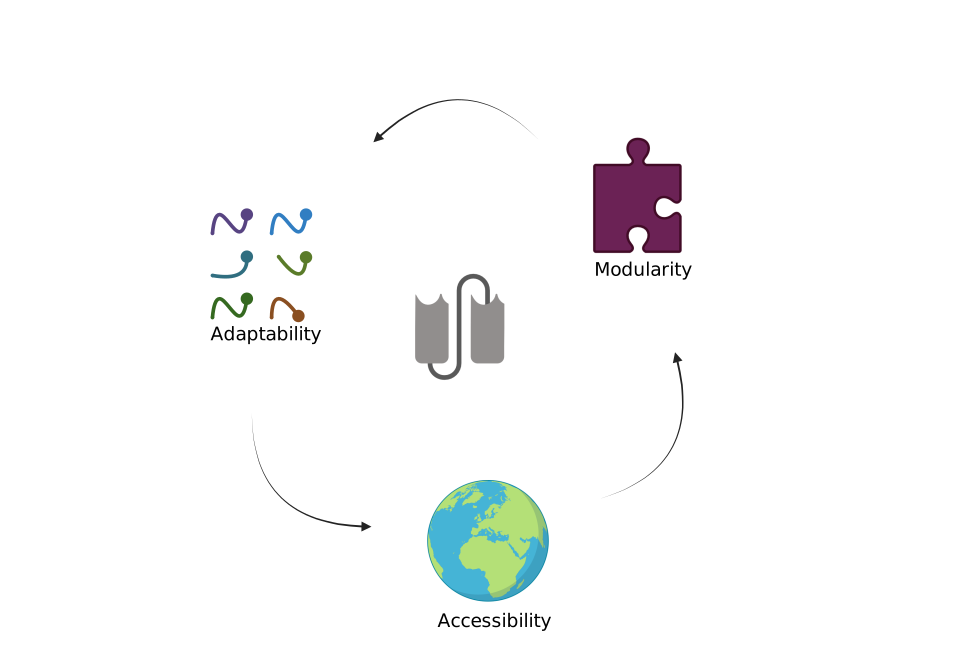
This highlights the modularity,
adaptability, and
accessibility of our platform for recombinant
protein production.