
1. Overview
2. Problem Identification
3. Solution Design
4. Implementation plan
5. Integration for Sustainable Development
Conclusion

Figure 1 IHP Overview
Our Integrated Human Practices framework is strategically designed to ensure our project, “Converting Waste Cooking Oil to Biodiesel,” is not only scientifically sound but also socially responsible, economically viable, and aligned with global sustainability goals. Guided by a continuous feedback loop with diverse stakeholders, our IHP process unfolded in four cohesive phases:
Problem Identification: We began with a public survey and field research at a Chongqing hotpot restaurant, uncovering a critical gap between public awareness of waste oil issues and knowledge of bio-enzymatic solutions. This grounded our project in real-world needs and operational challenges.
Solution Design: Through expert interviews with synthetic biology and green biomanufacturing specialists, we refined our technical pathway, emphasizing cost-effectiveness, industrial scalability, and safety.
Implementation Plan: Consultations with investment and industrial technology experts helped us navigate market entry strategies, policy landscapes, and commercialization pathways, emphasizing a dual-track approach: cost reduction and high-value product differentiation.
Integration for Sustainable Development: Finally, dialogue with a sustainability expert enabled us to map our project’s impact across multiple SDGs, positioning it as a demonstration of circular bioeconomy in action.
Throughout this process, we consistently incorporated stakeholder insights, ensuring our project decision was informed, reflective, and aimed at creating tangible societal and environmental value.
The following figure is a detailed classification of stakeholders involved in the project. Drawing inspiration from the Mendelow's Matrix, we analyzed stakeholders based on their influence and interest in the project.

Figure 2 Stakeholder Identification
2.1.1 Introduction
To ensure our iGEM project, "Converting Waste Cooking Oil to Biodiesel," is grounded in genuine public needs and expectations, we conducted a extensive online survey from May 11 to June 24, 2025. Disseminated primarily via WeChat, the survey gathered 442 valid responses from a diverse demographic across China. The primary objectives were to:
- Gauge public awareness of the environmental and food safety issues caused by waste cooking oil.
- Assess the familiarity with and acceptance of bio-enzymatic conversion technology.
- Understand the public's expected product advantages and their willingness to pay for biodiesel.
- Identify preferred information channels to guide our science communication strategy.
This data-driven approach ensures our project remains socially relevant and responsible from its inception.
2.1.2 Core Findings
- High Problem Awareness, Low Solution Awareness

Figure 3 The Impact of Waste Cooking Oil on Life
The survey reveals a significant disconnect between problem recognition and solution awareness. A strong majority of respondents perceive the negative impact of waste cooking oil on their lives, with food safety concerns being particularly salient. This indicates a ready public consensus on the severity of the issue.

Figure 4 Awareness of the bio-enzymatic solution
However, awareness of the specific bio-enzymatic solution is moderate. Crucially, 52.26% have only heard of the technology but lack detailed knowledge, while 27.83% have never heard of it or are completely unfamiliar. This highlights a critical "information gap."

Figure 5 “Do you support the processing of waste oils into biodiesel?”
The near-unanimous support rate of 88.91% once the concept is explained demonstrates that public resistance is low; the primary barrier is a lack of awareness, not opposition.
- Public Priorities: Performance and Environmental Protection

Figure 6 Desired Advantages of Product
When asked about the desired advantages of biodiesel, respondents prioritized Combustion Performance (62.9%) and Environmental Protection (52.94%), followed closely by Safety (61.09%). This clear preference signals that our project's communication must adopt a dual narrative: emphasizing both the practical performance and the tangible environmental benefits to resonate most effectively with the public.
- Cautious Optimism: Limited Willingness to Pay a Premium

Figure 7 Willingness to Pay a Premium
The willingness to pay for biodiesel is concentrated in the lower range. A combined 4.52% of respondents are only willing to pay a premium of up to 20% compared to conventional diesel, with the largest segment (57.47%) accepting a premium of less than 5%. This sends a clear message: cost-control and economic viability are paramount for the market competitiveness of our enzymatic biodiesel. The project's success hinges not only on technical success but also on achieving cost-effectiveness.
- New Media as the Dominant Information Channel

Figure 8 “What channels do you usually use”
The findings on information channels are decisive: Short-video platforms (e.g., Douyin, Bilibili) (69.46%) and Social apps (52.49%) are the public's primary sources for environmental information. Traditional media and offline activities lag significantly behind. This directly implies that our educational and outreach efforts must be digitally native, visual, and tailored for new media platforms to achieve maximum reach and impact.
2.1.3 Conclusion and Implementation
The survey unequivocally confirms that our project addresses a clear and pressing public concern. The central challenge is not skepticism but a knowledge gap. Therefore, bridging this gap through strategic, transparent, and accessible science communication is as crucial as the wet-lab work itself.
Guided by these insights, we will implement the following strategies:
- Education & Communication: Develop targeted content (short videos, infographics) for platforms like Rednote and Wechat, employing a dual narrative that highlights both environmental benefits and practical performance.
- Project Development: Prioritize cost-effectiveness in our enzyme engineering and process optimization to align with the public's price sensitivity.
- Human Practices: Proactively address public concerns about safety and economic feasibility through our experimental design and public engagement materials.
By integrating these public insights, we ensure that our iGEM project is not only a scientific endeavor but also a responsive and responsible initiative poised for meaningful societal impact.
2.2.1 Purpose
To gain an in-depth understanding of the actual recycling processes, existing pain points, and industry perspectives related to waste edible oil within the catering sector, particularly in Chongqing's characteristic hotpot industry, our team conducted a field visit to "Zhou Shixiong Hotpot Restaurant" in Banan District, Chongqing. We held an in-depth discussion with the owner, Ms. Li. The aim of this visit was to gather key firsthand information from the front lines, ensuring that our project, "Converting Waste Cooking Oil to Biodiesel," aligns closely with the operational models and needs of the real-world industrial chain, thus grounding our proposed solution in practical reality.


Figure 9-11 visit Hotpot Restaurant
2.2.2 Key Findings
- Operational Scale and Waste Oil Production: Quantifying the Problem Scale
The interview provided clarity on the scale of waste oil production from a single hotpot restaurant. The restaurant occupies over 3,000 square meters with an investment exceeding ten million yuan and consumes approximately 3,000 kilograms of hotpot base monthly. The resulting waste grease is filtered using specialized equipment and sold to government-designated, licensed recycling companies at a price of about 3.5 RMB per kilogram. This data offers a primary reference for assessing the stability of raw material supply and its cost structure.
- Regional Policy Differences: Identifying Key Challenges in the Recycling System
Ms. Li clearly pointed out significant differences in waste oil disposal policies across cities. In Chongqing, waste oil has clear commercial value and can be sold by restaurants. However, in larger cities like Shanghai and Shenzhen, waste oil is typically treated as food waste, and restaurants are required to pay the government for its disposal. This lack of policy uniformity and divergence in value perception highlights the complexity of establishing a national, transparent waste oil recycling and traceability system. It also indicates that our technological solution needs the flexibility to adapt to different local policies.
- Practitioner Concerns: Cost and Regulation are Core Drivers
As a direct stakeholder, Ms. Li's concerns are highly representative:
- Economic incentive is key: The ability to turn waste into treasure and generate direct income is the core motivation for restaurants to actively participate in recycling.
- Trust and regulation are prerequisites: Restaurants strictly choose government-designated, compliant recyclers primarily to avoid the legal and ethical risks associated with the illegal re-entry of "gutter oil" into the food chain. This corroborates the advice from our expert interviews – establishing a full-chain traceability system is crucial for obtaining a social license to operate.
- Operational simplicity: The use of specialized filtration equipment in the store indicates an industry demand for standardized and convenient pre-treatment methods.
- Seasonal Fluctuations and Consumer Preferences: Revealing Real-World Complexities
Ms. Li revealed potential seasonal fluctuations in raw material supply (peak season is July-August) and differences in consumer preferences for broth typesacross regions. These factors indirectly affect the composition and volume of waste oil collected, reminding us to consider the variability and diversity of raw materials in our process design.
2.2.3 Conclusion and Project Reflection
This field visit to the hotpot restaurant anchored our project firmly within the context of the real industry, moving beyond the theoretical level. It served as a crucial component of the "Problem Identification" phase, providing vivid confirmation and deepening of the survey results.
Key Insights and Project Adjustments:
- Strengthening Value Chain Design: The interview confirmed that providing stable and attractive economic returns to the restaurant end is the foundation for ensuring the sustainable collection of waste oil raw materials. This will influence our business model design.
- Focusing on Trust Building: The high sensitivity of frontline practitioners to food safety reinforces the necessity within our project for establishing a full-chain traceability system and seeking international sustainability certifications. This is not only a technical requirement but also a social license for market access.
- Considering Policy Adaptability: Learning about policy differences across regions means we need to more targeted research into the regulatory environments of different areas when planning future promotion paths.
Through the exchange with the hotpot restaurant owner, we deeply realized that a successful project must thoroughly understand and respect the operational logic of existing industries. This visit ensures that our technological exploration remains closely connected to the challenges and needs of the real world.
3.1.1 Purpose
To optimize the technical pathway for our project involving the high-efficiency expression of lipase in Pichia pastoris for the conversion of waste oils, we consulted Professor Song Qing, an expert in synthetic biology. Professor Song holds a bachelor's degree in Biology from Peking University and a Ph.D. in Biochemistry and Molecular Biology from the University of Chicago. With professional experience at the Glaxo Research Institute in the US and the University of Chicago, he possesses profound academic and industrial expertise in molecular biology and industrial microorganism applications. His guidance provided crucial direction for addressing key technical bottlenecks in our project.

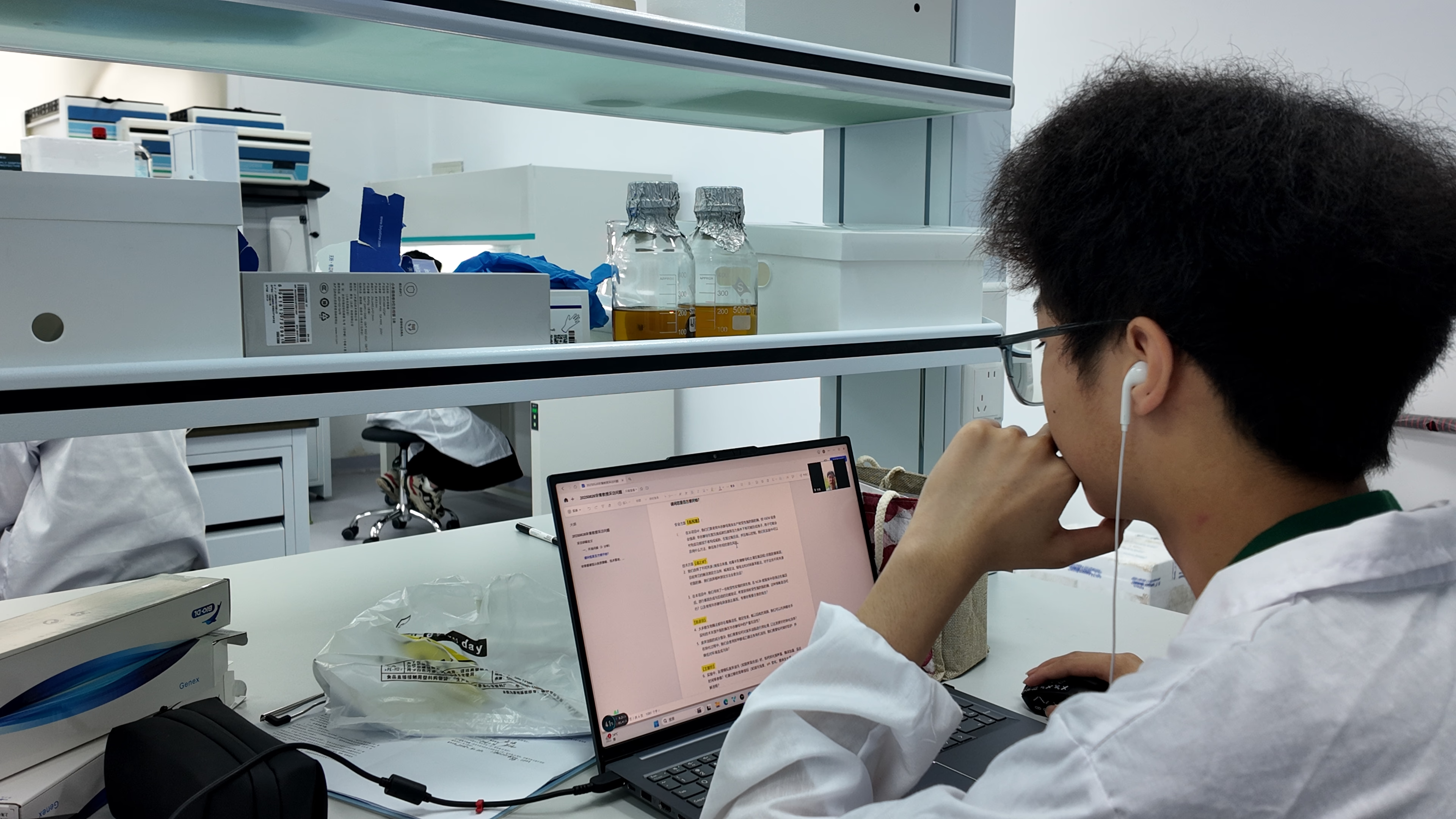
Figure 12-13 Interview with Song Qing
3.1.2 Key Points
Professor Song's recommendations primarily focused on molecular-level technical implementation and the feasibility and safety of laboratory operations. His core concern was microscopic realization—that is, how to efficiently and safely obtain active lipase in the laboratory.
- Spore Risk Control and Biosafety: Professor Song pointed out that Pichia pastoris is prone to spore formation under stress conditions. Therefore, providing a nutrient-rich environment during the laboratory cultivation stage and strictly adhering to biosafety protocols can effectively mitigate risks. This confirms the feasibility of our project within the iGEM safety framework.
- Lipase Activity Assay Methods: Regarding screening efficiency, he advised selecting detection methods that balance specificity, convenience, and cost-effectiveness. He recommended using the p-nitrophenol colorimetric method for the initial screening stages, as it is simpler to operate, provides reliable data, and offers advantages over time-consuming, low-throughput classic titration methods.
- Heterologous Expression Strategy and Enzyme Rational Design: He acknowledged the feasibility of synthesizing genes selected for tolerant lipases from the NCBI database and noted that industrial success cases (e.g., lipase from Aspergillus oryzae) demonstrate the need to comprehensively consider multiple factors such as thermostability, enzyme activity, and methanol tolerance, rather than focusing on a single attribute. He also suggested that AI modeling could assist in optimizing enzyme structure.
- Synergistic Regulation for Enhancing Lipase Yield and Activity: Professor Song emphasized multi-level synergistic optimization from transcription to translation: using the strong, inducible AOX promoter system in Pichia pastoris; optimizing the gene coding sequence to match the host's codon preference; and modulating the translation rate to ensure correct protein folding, avoiding inactivation due to misfolding caused by excessively rapid expression.
- Process Optimization and Safety Precautions: He indicated that standard pre-treatment of waste oils is necessary to remove impurities, suggesting reference to established parameters in industrial literature as a starting point for optimization. For handling organic solvents like methanol, strict adherence to laboratory safety protocols is mandatory. To address fluctuations in feedstock composition, the dilution method can be used to reduce inhibitor concentration, and production schedules can be adjusted flexibly to cope with seasonal variations.
3.1.3 Conclusion and Project Reflection
Prof. Song provided highly valuable guidance for the wet lab technical route of our project. His advice clarified that regarding technical feasibility, we need to systematically optimize every step from transcription to translation, rather than blindly pursuing high expression levels. For experimental safety, strict adherence to protocols is necessary to control spore risks. For process development, we should leverage industrial standards and optimize parameters based on the characteristics of our specific enzyme.
Professor Song's guidance ensures that our technical exploration is grounded in solid and reliable experimental science, making the project both innovative and practical. His insights focused on addressing fundamental scientific questions within the laboratory, laid a solid scientific foundation for the Solution Design of our project, forming a clear and necessary complement to subsequent expert interviews focused on industrial processes and market strategies.
3.2.1 Purpose
After Professor Song Qing established the technical foundation for the expression of lipase in Pichia pastoris, we confirmed the feasibility of the technology. However, we faced another core challenge: how to endow this laboratory technology with potential for industrial application, especially when dealing with complex and variable raw materials represented by hotpot waste oil from the Chongqing region. To advance the project to a stage with greater application potential, we specifically consulted Professor Li Jin.
Dr. Li Jin, Deputy Secretary-General of the Chongqing Industrial Innovation Alliance for Green Biomanufacturing, has long been dedicated to the industrial application of biotechnology. He has accumulated extensive practical experience in constructing microbial cell factories, developing fermentation processes, and translating laboratory achievements into market-ready solutions. His guidance is crucial for transitioning our waste oil conversion project from an iGEM project to a potential green industrial solution.

Figure 14 Interview with Li Jin
3.2.2 Key Points
- Industrial Compatibility of the Technical Route: Shifting from Lab to Factory Mindset
Prof. Li Jin highly endorsed the strategic value of utilizing Chongqing's abundant hotpot waste oil as a raw material, noting that it represents a significant advantage for achieving low-cost feedstock supply. He cautioned that the primary obstacle to industrialization is cost – our technology must ultimately be economically competitive with traditional petrochemical routes. This requires that during strain construction, we not only pursue high enzyme activity but also comprehensively consider production costs, process stability, and scalability.
- Process Development and Optimization: Focusing on Simplification and Scalability
Regarding process development and optimization, Prof. Li provided highly practical guidance. He emphasized that for waste oils with complex compositions, the pretreatment principle should be "the simpler, the better," focusing on solid-liquid separation and moderate heating to facilitate filtration, while avoiding costly refining steps that increase expenses. The key lies in selecting chassis microorganisms capable of efficiently utilizing the complex components of waste oil. For the fermentation process, he recommended adopting a systematic optimization strategy, progressing from single-factor experiments to multi-factor experiments, and establishing a monitoring system for key parameters to precisely control the fermentation process. This provides a clear, industrially-oriented experimental path for our wet-lab work.
- Commercialization Direction and Risk Mitigation: Targeting High-Value Markets
Regarding commercialization direction and risk mitigation, Prof. Li's advice was highly enlightening. He clearly pointed out that compared to bulk commodities like biodiesel, targeting high-value-added products such as enzymes for Sustainable Aviation Fuel might offer greater commercial prospects, as higher product value provides more cost tolerance for biomanufacturing processes. He also astutely highlighted that seasonal fluctuations in raw material supply are a practical issue that must be addressed in industrialization, suggesting the establishment of raw material reserves to balance supply.
3.2.3 Conclusions and Project Reflections
The interview with Professor Li Jin elevated our perspective from the laboratory to the broader vision of industrialization. His insights made us deeply realize that a successful iGEM project must not only address the technical question of "whether it can be done" but also proactively consider the industrial question of "whether it is worth doing."
Specifically, our project plan will undergo the following strategic adjustments:
- Clarify Commercial Positioning: We will set enzymes for Sustainable Aviation Fuel as our long-term goal and elaborate on the market logic and technical advantages of this high-value direction in the Entrepreneurship section.
- Strengthen Economic Design of Processes: In subsequent wet-lab experiments, we will treat "simplified pretreatment" and "reduced production costs" as optimization objectives equally important as enhancing enzyme activity. For example, low-cost raw materials will be prioritized in medium selection.
Through this interview, we have become more convinced of the application value of our project. Professor Li Jin's experience underscores the great potential of our project in addressing major social issues like waste recycling and has pointed us toward a practical path from the laboratory to industrial application.
4.1.1 Purpose
To refine the commercialization pathway of our project converting waste edible oils into biodiesel via enzymatic methods, we consulted Dr. Liu Zhen. Dr. Liu possesses both a chemical background and expertise in financial investment, particularly with extensive experience in commodities and energy chemicals. He provided critical insights into assessing the feasibility, cost challenges, and potential investment strategies for moving this synthetic biology technology from the laboratory to the market.

Figure 15 Interview with Liu Zhen
4.1.2 Key Points
- Cost Bottleneck and Dual-Track Strategy
Dr. Liu Zhen acknowledged the environmental advantages of the enzymatic method but clearly pointed out that its primary commercial obstacle is high costs, currently approximately RMB 700 higher per ton compared to traditional chemical methods. He recommended adopting a dual-track strategy: the primary goal is to leverage synthetic biology to optimize enzyme performance and production efficiency to reduce costs; secondly, explore high-value by-products such as aviation biofuels or lubricants to enhance overall economic viability. This advice prompted us to elevate cost control as a core KPI while pursuing technical indicators.
- Policy Drivers and Social License
Regarding market entry, Dr. Liu strongly recommended prioritizing the transportation fuel sector. This sector benefits from the clearest policy subsidies and the highest market acceptance, making it the most ideal initial application scenario. He emphasized that building trust is crucial. Establishing a full-chain traceability system and obtaining international sustainability certifications are key to completely alleviating public concerns about the safety risks of gutter oil and gaining a social license. This has directed our product promotion toward compliance and transparency.
- Core Challenges in Industrialization
For industrialization implementation, he highlighted that the core challenge lies in achieving stable large-scale production. This means our wet lab work must not only meet conversion rates at the laboratory scale but also proactively address practical issues during scaling, such as maintaining enzyme activity in large-scale production and handling impurities in industrial equipment. Additionally, establishing stable partnerships with restaurants and waste oil recyclers is fundamental to ensuring raw material quality and supply stability.
4.1.3 Conclusions and Project Reflections
This interview profoundly influenced our project direction, shifting our focus from purely technical validation to a balanced emphasis on technical feasibility and practical implementation. Dr. Liu Zhen’s guidance made us realize that the success of a responsible synthetic biology project depends not only on experimental breakthroughs but also on the ability to integrate technology, costs, and regulations into a viable solution.
The implementation of our project will incorporate the following key adjustments
- Shift in Technology Development Direction: Our enzyme engineering optimization will explicitly focus on reducing unit production costs and enhancing industrial stability as core KPIs, moving beyond merely pursuing activity metrics.
- Focused Market and Partnership Strategy: We will prioritize researching collaboration models with local small-scale biodiesel producers or waste oil treatment centers. Concurrently, we will analyze national and local biofuel subsidy policies to make our business plan more actionable.


Figure 16-17 Interview with Chen Shuang
4.2.1 Purpose
As our technical pathway became clearer, we needed to understand where our enzymatic conversion technology would fit within the existing industry landscape. We engaged Dr. Chen Shuang, a researcher with extensive experience in waste oil resource utilization at Chongqing Technology and Business University, for a cross-disciplinary dialogue. Our goal was to gain insights from the perspective of chemical catalysis and to identify a unique, differentiated development path for our enzymatic technology.
4.2.2 Key Points
- Navigating a Policy-Driven Market
Dr. Chen outlined the industry structure: waste oil recycling in China is dominated by environmental sanitation groups, creating a closed-loop system. The final products form a tiered market based on policy standards, ranging from first-generation biodiesel to higher-value sustainable aviation fuel. He emphasized that new technologies must find their niche within this mature system, for instance, by leveraging enzymatic methods' unique adaptability to handle high-acid-value waste oil that traditional processes struggle with.
- Competitiveness Analysis: Shifting from Replacement to Complementarity
When comparing different technical routes, Dr. Chen stressed the importance of avoiding the technical superiority trap. He analyzed that while chemical methods benefit from decades of accumulated process stability, the value of enzymatic methods should lie in creating new applications, not simply replacing existing ones. For example, in fine chemical sectors requiring low-temperature reactions or wanting to avoid by-products, enzymatic methods could carve out a unique market. This insight prompted us to rethink our strategy – from competing on parameters to creating demand.
- Industrialization Threshold: Strategies for Breaking into a Cost-Sensitive Market
"The key to industrializing a lab technology isn't making it the best, but making it cheap enough," Dr. Chen stated frankly, noting that many innovations fail at the cost barrier. He recommended a phased commercialization strategy: first validate the technology's value in specific high-end markets, then gradually reduce costs through process optimization. He also suggested practical methods like using orthogonal experiments to accelerate parameter optimization and conducting small-scale pilot tests with catering businesses.
4.2.3 Conclusions and Project Reflections
Dr. Chen teached us that a successful iGEM project must speak both the language of the lab and the logic of the market. His objective analysis from the chemical catalysis perspective was particularly valuable, offering a unique view from the other side regarding the viability of enzymatic methods.
This interview led to significant shifts in our project. We will reframe our value proposition from simply promoting enzymatic advantages to explaining its complementary role within the industry, highlighting its ability to process challenging feedstocks and its lower carbon footprint. Furthermore, while continuing enzyme activity optimization, we will add "unit production cost" as a key lab metric, integrating economic assessment early on. We also plan to conduct small-scale in-situ tests with hotpot restaurant chains to gather compelling real-world data.
5.1.1 Purpose
To evaluate the deeper value of our project from a broader perspective, we consulted Dr. Liu Tianle, an expert in the field of Sustainable Development Goals. Dr. Liu specializes in environmental and climate change economics, sustainable development, and public policy research. We aimed to leverage his professional perspective to systematically validate our project's actual contribution to the global sustainable development agenda.

Figure 18 Interview with Liu Tianle
5.1.2 Key Points
- From Local Solution to Global Agenda
Dr. Liu helped us establish a comprehensive SDG mapping framework. He pointed out that our project actually operates at the intersection of multiple key sustainable development goals: it not only addresses specific waste oil treatment issues but also demonstrates diverse value. Beyond the obvious environmental benefits (SDG 7, 12), he particularly emphasized the project’s extended value in public health (SDG 3), industrial innovation (SDG 9), and urban governance (SDG 11).
- From a Technical Project to a Sustainable Development Solution
Dr. Liu suggested that we position the project as a "demonstration case of a circular economy based on synthetic biology." This positioning not only highlights technological innovation but also underscores the project’s exemplary value in promoting the transformation of production and consumption patterns. He further noted that such a positioning would help secure policy support, as the project aligns with multiple national strategic directions, including climate change response, circular economy development, and technological innovation.
5.1.3 Conclusion and Project Reflection
This interview provided authoritative validation of our project’s value. Dr. Liu’s professional analysis reinforced our confidence in the project’s far-reaching significance. We can now clearly communicate to all stakeholders that this is not merely a biotechnology project but a concrete contribution to global sustainable development goals. Every experimental advancement drives progress in five key areas: health security, clean energy, industrial innovation, sustainable cities, and the circular economy.
Our Integrated Human Practices work has been deeply woven into the core of the project, serving as both a guiding compass and a validation mechanism. By systematically engaging with a wide range of stakeholders, including the general public, industry practitioners, academic researchers, and investment experts, we have ensured that our project is not only technically innovative but also socially relevant and responsibly implemented.
- We integrated Human Practices throughout the project lifecycle, from initial problem-scoping to final impact assessment, making iterative adjustments based on continuous feedback.
- Our approach serves as an inspiring example of how iGEM teams can bridge lab science with real-world needs, demonstrating a replicable model for responsible synthetic biology.
- The comprehensive documentation of surveys, interviews, and reflections provides a transparent roadmap that others can build upon or adapt.
- Each activity was thoughtfully implemented with clear rationale, context, and linkage to prior work, ensuring that stakeholder inputs directly shaped project direction.
- We incorporated diverse views, balancing public sentiment, industry constraints, technical feasibility, and sustainability principles, to create a well-rounded and inclusive project design.
- Ultimately, we are confident that our Human Practices efforts have helped create a project that is responsible and beneficial for the world, contributing to cleaner energy and a more sustainable future.
Through this holistic and reflective practice, we have transformed a laboratory idea into a socially embedded solution poised for meaningful impact.

