Interview with AP Environmental Science Teacher
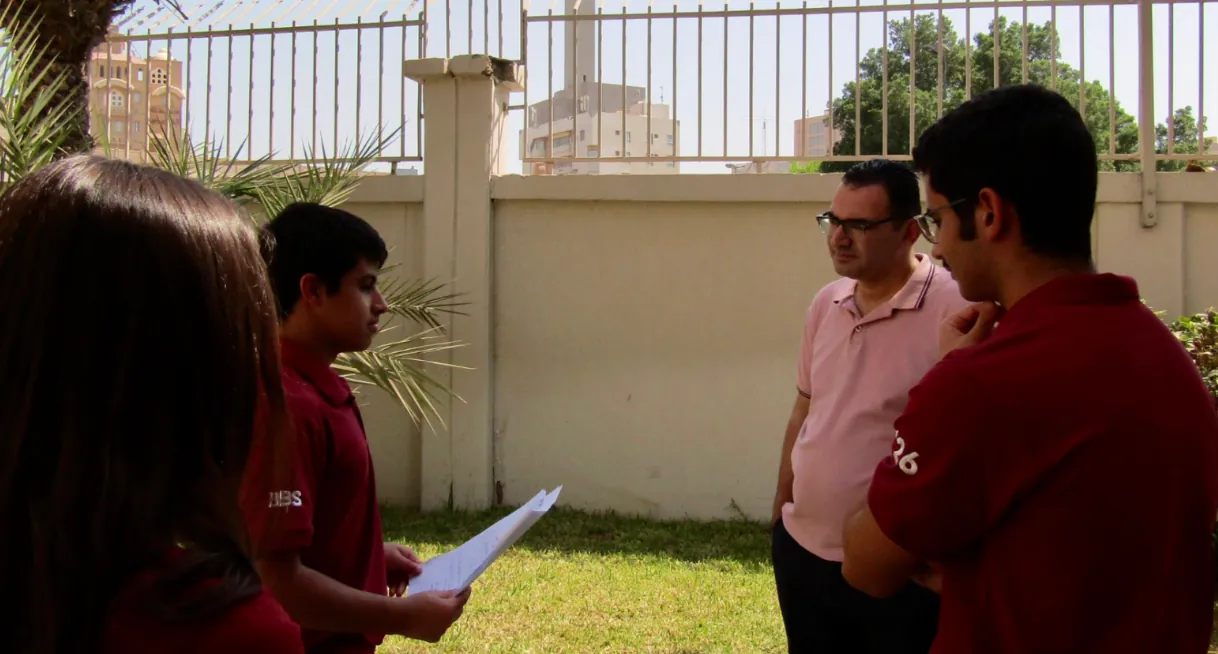
We interviewed our AP Environmental Science teacher to gain insight into sustainable agriculture and water management. This discussion helped us understand the challenges of soil degradation and how bio-based solutions can support long-term ecological balance.
Multiple Lab Visits
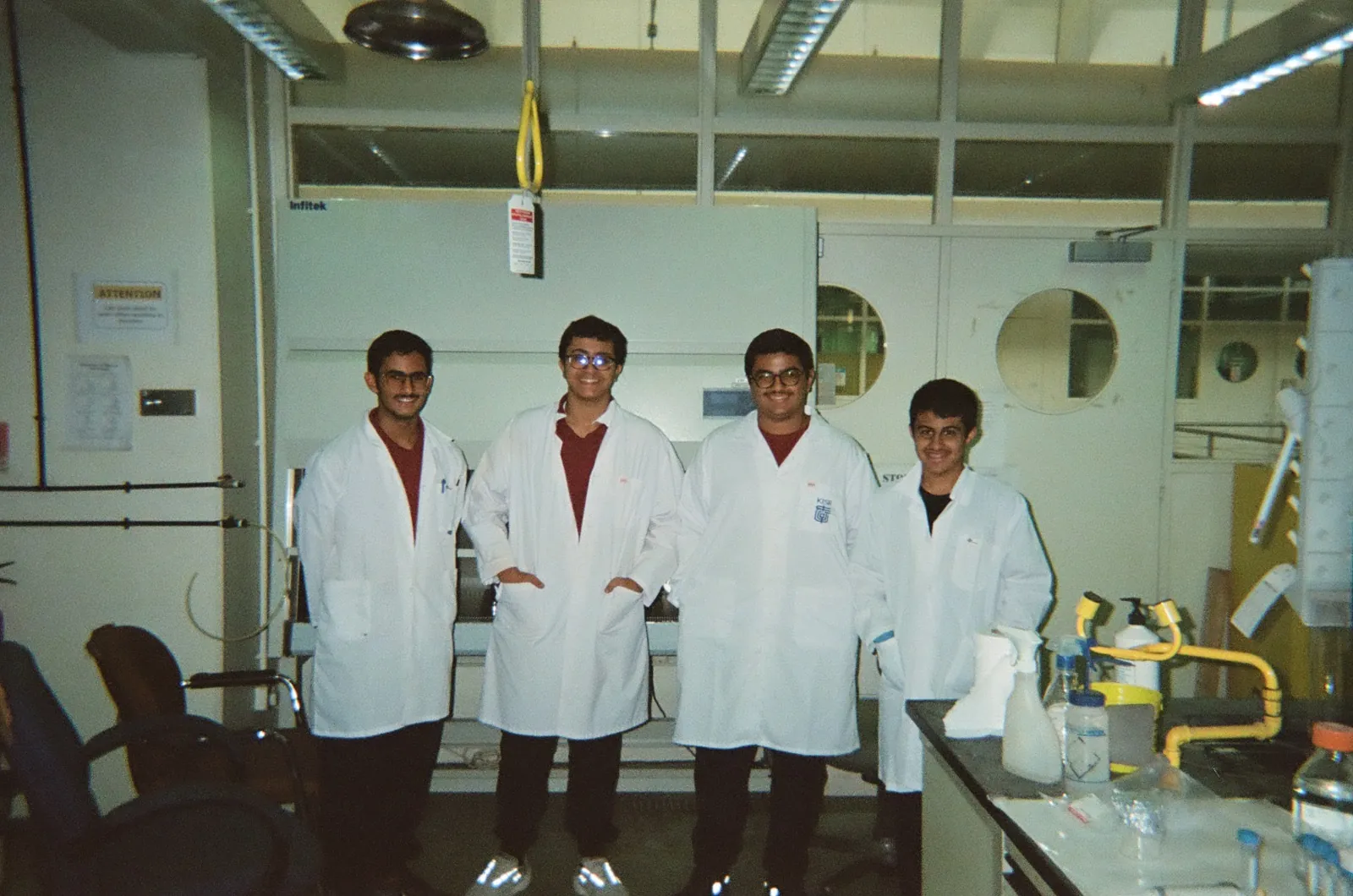
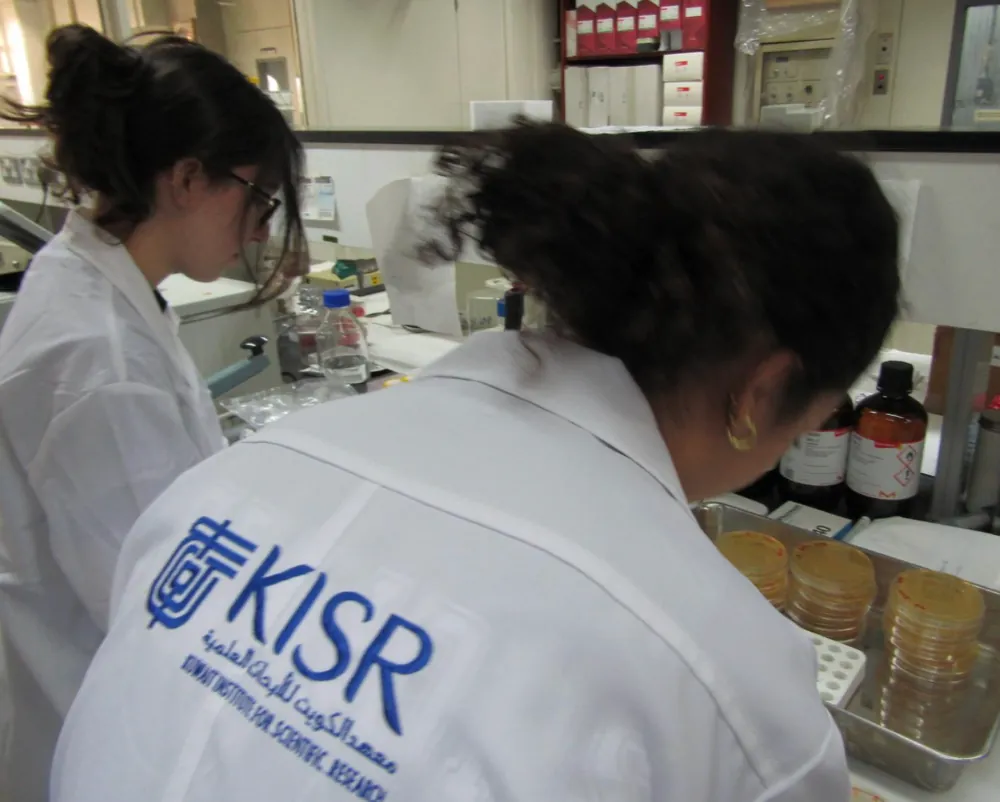
We visited the lab several times to observe and learn about different stages of the bio-based material testing process. In addition, we constantly participated in being hands-on involved with the different stages of the experiment.
Guidance from Dr. Thnayan Al Onaizi
We learned from Dr. Thnayan Al Onaizi, a researcher at the Kuwait Institute for Scientific Research (KISR) with a degree in environmental microbiology and bacteriology. He guided us through the scientific side of our project and explained how bio-based innovations can improve soil health and reduce pollution.
Collaboration with Other iGEM Teams
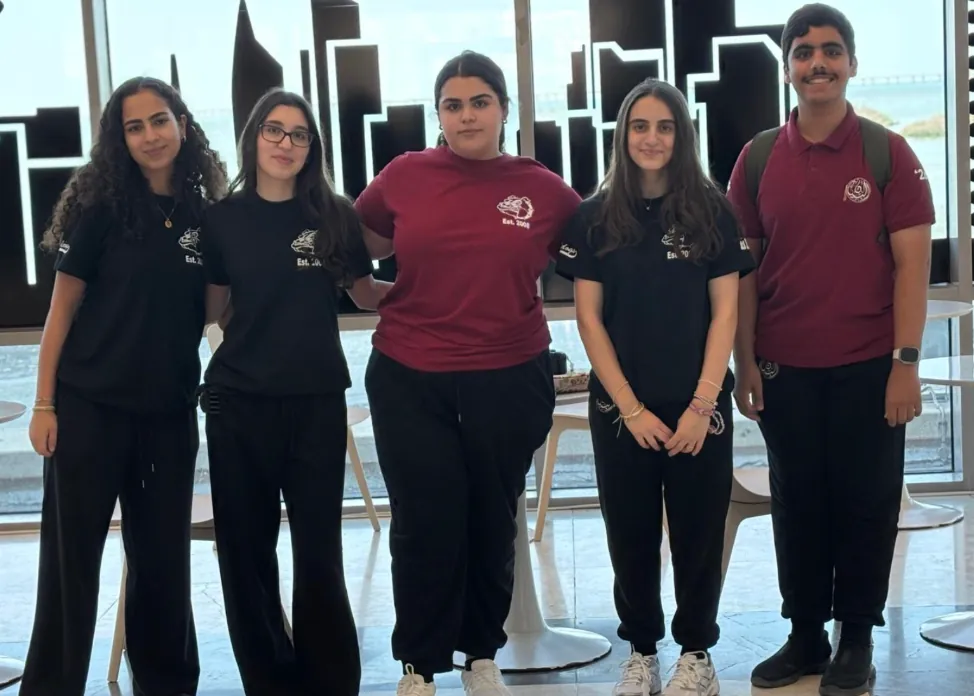
We reached out to other iGEM teams to exchange ideas, share feedback, and learn from their experiences, strengthening our project through collaboration and community. This step allows us to refine our methods, improve communication, and align with global best practices.
Meeting with iGEM Ambassador
Meeting with our iGEM ambassador helped us understand how to align our project with iGEM’s global standards and goals. This session provided feedback on presentation, documentation, and human-practice integration, ensuring our project meets the expectations of the competition.
Elementary School Presentation
We visited the elementary section of our school, Al-Bayan Bilingual School (BBS), to introduce young students to the concept of sustainability and bio-based solutions in a fun, interactive way. This outreach activity encouraged curiosity and inspired students to think about how biology can solve real-world problems.