
According to the WHO, every year, more than 1.27 million deaths worldwide are directly attributable to antimicrobial-resistant infections. Staphylococcus aureus, particularly methicillin-resistant S. aureus (MRSA), is one of the deadliest culprits, responsible for an estimated 100,000 deaths annually. In hospitals, MRSA accounts for up to 50% of all S. aureus infections, making it a leading cause of bloodstream infections, pneumonia, and surgical site infections that are increasingly difficult to treat.
Eroom's Law
In contrast to Moore’s Law (which predicts exponential improvements in computing), Eroom’s Law describes the inverse trend in drug discovery: the cost of developing a new drug roughly doubles every nine years. Antibiotics have been especially affected despite the urgent global need, pharmaceutical companies are abandoning antibiotic R&D due to high costs, long development timelines, and low financial return. This has created a dangerous innovation gap, where resistant bacteria like MRSA are evolving faster than new treatments can be developed.
Current Solutions
Current strategies against antibiotic resistance include:
- Last-line drugs like vancomycin and linezolid are used, but resistant MRSA strains have already emerged.
- Bacteriophages selectively kill bacteria, but have narrow host ranges and other issues.
- Antimicrobial peptides (AMPs) are natural and synthetic peptides that disrupt bacterial membranes, though they often suffer from toxicity and stability issues.
- Combination therapies use multiple antibiotics or adjuvants to restore activity, which can temporarily slow resistance but does not solve the long-term problem.
- Infection control through hospital hygiene, rapid diagnostics, and stewardship programs reduce spread but cannot eliminate resistant strains.

Our Project SAUR-eus
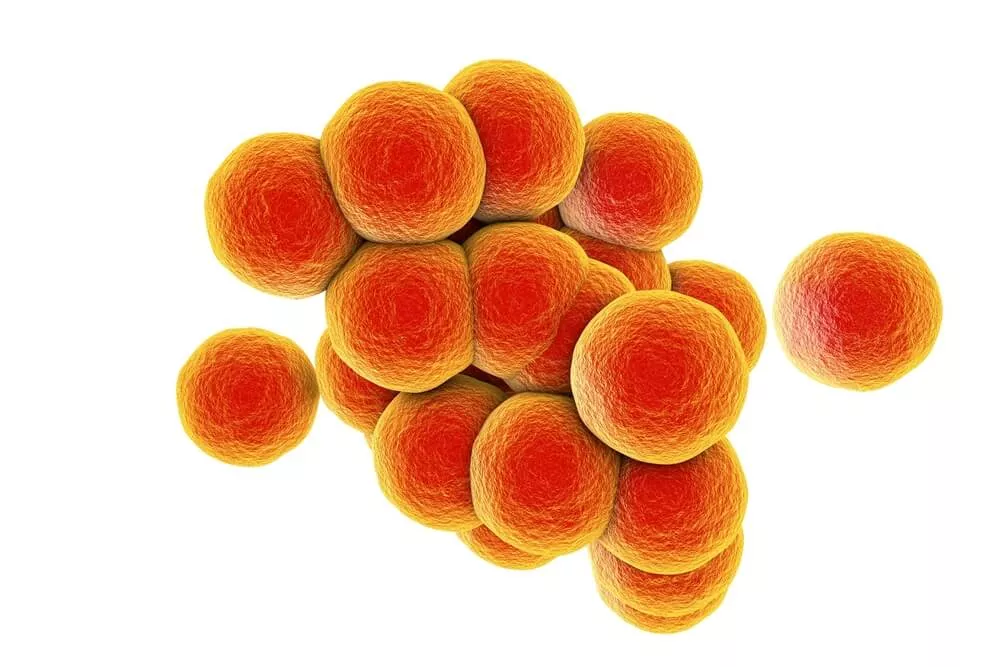
Staphylococcus aureus has become increasingly resistant to conventional antibiotics, creating a critical public health threat. Our project focuses on a bioinformatics-driven strategy to identify and disrupt genes responsible for the pathogen’s cell wall integrity without harming beneficial microbiota. Using genomic analysis, metabolic pathway mapping, and computational modeling, we pinpoint molecular targets unique to S. aureus. This precise targeting approach could pave the way for next-generation antimicrobials that slow resistance development and protect healthy bacterial communities.
Why CRISPR?
With the rise of antibiotic-resistant pathogens like MRSA, there is a pressing need for precision-based tools to study and disrupt bacterial viability. Our project leverages the specificity of CRISPR-Cas9 to target two essential genes in Staphylococcus aureus: mraY, involved in cell wall synthesis, and dnaG, a primase critical for DNA replication. Instead of traditional transformation, we aim to amplify the targeted regions using PCR after CRISPR treatment and confirm gene disruption via gel electrophoresis. This streamlined, DNA-level approach allows us to demonstrate knockout feasibility in vitro while maintaining a BSL-1 safe protocol. Unlike approaches such as using only phage therapy, which depend on naturally evolving viruses, CRISPR offers programmable precision, predictable outcomes, and rapid adaptability. By cutting directly at essential genetic sites, our system avoids the unpredictability of viral evolution and reduces the risk of collateral effects, while remaining modular and accessible for both research and educational settings.
Follow Our Journey
Join us as we explore science, innovate for the future, and share our discoveries with the world. Follow our updates and be part of our mission.
Learn About the Project Meet the team