Synthetic biology stands at the frontier of 21st-century science, yet its concepts and implications often remain distant from everyday life. We believe that understanding how to interact with microorganisms, genetically modified organisms, and the possibilities of synthetic biology should not be reserved for specialists. That is why our education efforts span across high school students and teachers, university peers, and the broader public—ensuring no one is left behind.
More than "spreading knowledge," our goal is to create a dialogue: listening, exchanging, and translating complex science into accessible ideas. From fundamental principles to real-world applications, our initiatives strive to open the door to a field that is reshaping our world, while fostering curiosity and critical reflection in diverse communities.
"Educare è come seminare: il frutto non è garantito e non è immediato, ma se non si semina è certo che non ci sarà raccolto."
- Carlo Maria Martini
"Education is like sowing seeds: the harvest is never immediate nor guaranteed, but without sowing, there can be no harvest at all."
- Carlo Maria Martini
Build Your HERO! - Our SynBio Boardgame
Who said you can have fun with bacteria only in the lab? With our boardgame, we transferred that fun to the table. Build Your HERO introduces players to the challenges of synthetic biology in a playful and interactive way, where each participant manages their own lab and tackles the degradation of a pollutant. By designing plasmids, performing transformations, and harnessing the unique "superpowers" of different bacterial chassis, players discover the principles of genetic engineering while competing.
Educational games have been shown to enhance motivation and knowledge retention compared to traditional methods [1][2], making play a powerful tool for learning. With Build Your HERO, science becomes not only understandable but also engaging, sparking curiosity well beyond the classroom.
Why our SynBio Boardgame is different?
Our board game vividly brings real laboratory dynamics to life, turning complex lab processes and everyday challenges into an engaging tabletop experience. You know all those things you understand perfectly in the lab but can never quite explain to your friends or family? Well, now you have the solution! Come and discover a sneak peek of what our game is all about!
In these cards, you'll find a collection of unfortunate lab events that every researcher has faced at least once — miscalibrated pipettes, contaminated samples, or even budget cuts that ruin your plans. Just like in real life, things don't always go as expected in the lab!
These cards let you strengthen your lab, just as real researchers do when managing time, resources, and teamwork. You can invest in interns, reuse backup ligations, "borrow" plasmids, or even patent your best discoveries — all playful echoes of real lab dynamics!
Here you'll meet the main characters of our game — our favorite tiny giants! Each microbe has unique abilities inspired by its real biological features: metabolic superpowers, resistance to harsh conditions, or bioremediation potential. Just like in nature, diversity is their strength!
These are your mission cards — the pollutants we strive to remove from our environment. They reflect real-world environmental challenges that scientists are tackling today, from plastics to herbicides. Some are tough, others sneaky, but all demand innovation to overcome!
These cards represent the core elements of synthetic biology: promoters, genes, and terminators. Just as in real lab work, combining these pieces allows players to design and build new biological functions — showing how creativity and science come together to engineer life responsibly.
×
Card Type
Description
Card description...
Let’s play together
Players: 2-6
Average playtime: 1h – 1h 30m
Age 17+
Player Token
1$ Banknote
2$ Banknote
5$ Banknote
Dice 1
Dice 2
Game Clock
Green Deck
Events Deck
Cutest card of all – your bacterium! Not just a mascot, but your most powerful ally! Each bacterium has its own unique ability, conferring tangible advantages in some aspects of the game. For example, Rhodococcus opacus is so good at degrading pollutants that you can insert one gene less than the other players. It is very powerful but grant us some favor toward our dear friend, which gives us so much trouble in the lab.
Rhodococcus Card
Your final goal! Degrading it is hard, we are aware, but the world will love you. Transform your bacterium with all the required genes and you will win. Simple in theory, not so easy in practice.
PET Card
Cloning techs allow to create new vectors tailored to your needs. Make sure to have always one of them, or the disadvantage will be greater than expected. You will see every technique you use in your lab – some will bring good memories; others will make you roll your eyes to the sky because you thought you finally had gotten away with it.
Gibson Assembly
This is your secret stash of cards. Avoid giving hints to the other players, or they might feel an irresistible urge to steal from your hand. Yes, there are some not-so-ethical investments allowing to steal from other's labs. Also, don't be so greedy: you can only have five cards at the end of your turn.
Action Card 1
This is your secret stash of cards. Avoid giving hints to the other players, or they might feel an irresistible urge to steal from your hand. Yes, there are some not-so-ethical investments allowing to steal from other's labs. Also, don't be so greedy: you can only have five cards at the end of your turn.
Action Card 2
This is your secret stash of cards. Avoid giving hints to the other players, or they might feel an irresistible urge to steal from your hand. Yes, there are some not-so-ethical investments allowing to steal from other's labs. Also, don't be so greedy: you can only have five cards at the end of your turn.
Action Card 3
📖
Rulebook Preview
Download the complete rulebook for Build Your HERO!
High schools are a crucial space where curiosity meets future choice. By engaging with students and teachers at this stage, we can inspire the next generation to see synthetic biology not as distant science, but as an accessible and exciting field. Reaching out early helps foster awareness, critical thinking, and enthusiasm that can shape how society approaches biotechnology in the years to come.
Students
Why high school students?
High school is often the first moment when students encounter biology in a structured and experimental way, and the impressions they form at this stage strongly influence how they perceive science later on. Introducing synthetic biology during these years helps demystify complex concepts and shows that cutting-edge research is not beyond their reach.
Students are not only the “future,” as is often said, but also the “present”: they already shape how science is perceived within their schools, families, and communities. By engaging them now, we recognize their active role as contributors to today’s dialogue on biotechnology, not just tomorrow’s researchers.
🎯
Topic
Introduction to Synthetic Biology
👩🏫
Teaching strategy
Playful Learning with our Boardgame
🤝
Peer-To-Peer activity
Methods
Our approach with high school students combined an introduction to the key building blocks of synthetic biology with an interactive learning activity. To achieve this, we designed the board game Build Your HERO, which allows students to explore synthetic biology concepts in a playful and accessible way. This choice was intentional: while high school students may not yet be ready to dive deeply into complex theoretical details, they can still meaningfully engage with the ideas when presented through creative and enjoyable formats.
Importantly, this does not mean lowering the scientific content but rather finding methods that spark curiosity and sustain attention. We believe it is more valuable to leave a positive impression on many students, encouraging them to see science as approachable and exciting, than to focus on training a single “future synthetic biologist” while others leave without retaining anything.
In this effort, we were also praised for being 20–23 years old ourselves: our age and experience made us relatable role models, closer to the students’ perspective and more effective in creating a genuine connection than adults who might be perceived as distant.
Lectures and Activities
The outreach activities consisted of two-hour sessions conducted directly in the high school classrooms of 17–18-year-old students. Each lesson began with a brief introduction to synthetic biology, focusing on fundamental concepts such as genetic parts, genes, plasmids, and assemblies. The aim was not to overwhelm students with technicalities, but to slightly expand their pre-existing knowledge so that they could follow and understand the dynamics of the game.
Following this introduction, students were divided into groups of approximately six and invited to play Build Your HERO. In the game, each card representing a biological element is accompanied by concise “scientific notes” clarifying its real biological role, linking the playful activity back to authentic scientific principles. This structure ensured that the students not only enjoyed the activity but also engaged with key aspects of synthetic biology in a memorable and accessible way.
If you want to know more, go and take a look at the Boardgame page
If we want to inspire students, our impact is often limited to the short time we can spend with them. Teachers, on the other hand, accompany their students every day for nine months a year, shaping their curiosity and guiding their learning. An engaged and curious teacher naturally transmits that enthusiasm to their students, while their expertise as educators allows them to find the most effective ways to make complex topics accessible and engaging.
By working with teachers, we multiply our reach: every new idea we share can echo through classrooms long after our visit, turning a single moment of education into a sustained journey of discovery.
🧠
Focus:
How researchers operate in synthetic biology
💻
Dry lab:
Bioinformatics analysis of proteins
🧪
Wet lab:
Cloning techniques and Bacterial transformation
Methods
Our approach to teaching science teachers was grounded in the principles of adult learning, recognizing that educators are not only experienced learners but also professionals who must continuously adapt their skills to transmit knowledge effectively. Unlike students, teachers are capable of engaging with specialized content and complex scientific concepts, making it possible to provide a deeper theoretical basis and advanced technical knowledge.
At the same time, we emphasized translatability: rather than limiting the course to advanced knowledge, we developed modules that could be directly adapted for classroom teaching. We introduced concrete and manageable laboratory experiments—designed to be performed with limited resources but still representative of real molecular biology practices. Similarly, we provided teachers with user-friendly bioinformatics tools and step-by-step workflows that can be integrated into classroom activities, lowering technical barriers while retaining scientific rigor.
Lectures and Activities
Dry Lab
Bioinformatics is a key pillar of modern biology, bridging experimental data and biological insight, allowing researchers to uncover patterns, predict functions, and accelerate discoveries from genes to ecosystems. Since it is never included in Italian high school curricula, we wanted to empower teachers to bring this innovative field to their students.
The course focused on bioinformatic methods for the analysis of proteins, from their primary sequence to their structure.
Wet Lab
The wet lab part consisted of two main experiments: carrying out a Gibson Assembly and STR Typing. These experiments were selected because they were deemed achievable also by students and will be proposed to them later during the year.
The school's laboratory is very well equipped, and we wanted to expand the range of possibilities available for teachers. They had no prior experience with cloning techniques, so we introduced and trained them in these methods. While they routinely performed STR typing using pre-defined kits, they lacked the ability to design custom experiments; we addressed this gap by teaching them how to build their own primers and plan their own assays.
Explore all the Lectures and Labs
The first day was fully dedicated to bioinformatics, providing teachers with the foundational tools and concepts every bioinformatician commonly uses. As fluorescent proteins are widely employed in synthetic biology and would be used the following days in the experiments, they were chosen as case study.
Teachers analyzed the primary sequences of these proteins using both global pairwise alignments and multiple sequence alignments (MSA), exploring sequence conservation and variability. Subsequently, they examined the 3D structures using ChimeraX, gaining insight into how sequence differences translate into structural and functional variations.
Important: All tools used—BLAST Suite and ChimeraX—are freely available and fully usable in classroom settings, making them directly transferable to teaching activities.
The second day introduced teachers to the real-world possibilities of synthetic biology, highlighting its applications in biotechnology, medicine, and environmental sustainability. After this overview, we moved from theory to practice with a hands-on session on Gibson Assembly, a modern DNA cloning technique that allows seamless joining of multiple DNA fragments in a single reaction. This gave teachers the opportunity to experience one of the key methods used in synthetic biology research and to understand how genetic constructs can be built in the lab.
The final day focused on primer design for STR typing, a technique already familiar to teachers but usually performed with fixed commercial kits.
We introduced the principles of effective primer design, covering key characteristics such as optimal length, melting temperature, the use of a GC clamp, etc. Participants then applied these rules to design their own primers and tested them in on genomic DNA—successfully confirming that their primers worked. This session not only expanded their technical skills but also gave them the autonomy to design experiments beyond the limitations of pre-defined kits.
Bioinformatics: completely free and available for any major operative systems (Windows, MacOS, Linux)
Wet Lab: considering that reagents are often sold in quantities which can be used for more than one reaction, reagent costs are estimated around 30€ per person taking part in the lab. Costs may vary depending on the seller and on the country. The following machinery is required: thermal cycler, microwave oven, electrophoresis cell, incubator, heated water bath, microcentrifuge, micropipettes, transilluminator.
University
Why reaching out to undergraduates?
Engaging with undergraduates is a crucial step in strengthening the future of synthetic biology. At this stage of their education, students are beginning to specialize, make decisions about internships, and choose directions for their theses and their future careers. Peers introducing them to synthetic biology provides not only knowledge but also inspiration, showing how their skills can be applied to pressing global challenges.>
Methods
University students already possess a strong scientific foundation, allowing for deeper discussions on both technical and ethical dimensions of synthetic biology. For this reason, our educational methods were tailored to their specific needs: we introduced specialized content that went far beyond high school basics, focusing on advanced applications and real research practices.
As peers, we could frame synthetic biology in a relatable way, sharing experiences of internships, thesis work, and career opportunities that resonated directly with their stage of study. This peer-to-peer approach not only made our activities more accessible but also highlighted the concrete paths through which undergraduates can actively contribute to, and eventually shape, the future of the field.
Seminar for Viral and Microbial Biotechnologies Course
Professor Marco Rinaldo Oggioni invited us to hold a seminar for his Viral and Microbial Biotechnologies course, part of the Biotechnology degree taught at the University of Bologna – and we gladly accepted the opportunity! The aim was diving inside the thought process needed to carry out synthetic biology experiments, such as our iGEM project.
We began by exploring the fundamentals of systems and synthetic biology, including the concept of metabolic engineering and the characteristics that define an ideal microbial chassis. From there, we delved into the design of plasmids, examining their essential components. We also investigated strategies for identifying genes to insert, drawing on resources like KEGG metabolic maps and cheminformatics-based prediction tools.
Finally, we gave a short overview of what the iGEM competition is and its contributions for the advancement of synthetic biology.
We believe that the insights shared during the session will inspire and equip the students with the knowledge and motivation to further explore synthetic biology. Overall, it was a positive experience for both us and the students, and we look forward to seeing the innovative projects they will develop in the future - and we left some hints to form a team for the next years!
We maintain profiles on the major social networks – Instagram (@bacman_igem) and TikTok (@bacmania). We believe they are useful tools to spread the word of synthetic biology in a friendly and catchy way, allowing us to reach a broad and probably inexperienced public. We don't want to just teach notions, but we want to make them entertaining. Synthetic biology and memes – we can do both!
Instagram
Why we choose Instagram?
Instagram is the most widely used social network among young people today. Major Italian newspapers such as La Repubblica, Il Post, and Corriere della Sera have opened media channels on the platform to share current news and report on events around the world. In the scientific field as well, journals like Nature and Science have built a large following. Beyond that, Instagram hosts a growing number of science communicators who have made social media their profession. In Italy, well-known examples include Barbascura and GeoPop, while internationally we can think of pages like Andrew Huberman and Jessie Inchauspé. As the data also shows, we believe this platform is one of the most effective ways to reach a broad audience, from young people to adults, allowing us to make ourselves known and to explain to the public what synthetic biology is.
Which strategy we adopt?
On social media, we mainly worked with three different types of content: reels, carousels, and themed stories. Since we started from scratch, in order to build visibility and grow our audience, we reached out to several Italian science communicators and UNIBO student groups with whom we planned shared posts. This strategy allowed us to reach a broader audience than our own while helping us grow at the same time.
Reels were chosen for their transparency: people often feel more engaged when explanations are given directly by a person
Carousels were chosen for collaborations: being permanent and easy to read, they allow people to quickly get interested in a topic and explore it further through questions
Themed stories were chosen to provide continuity: having regular weekly stories about current events keeps people updated and helps create a stronger connection with what the page has to offer
The biggest strategy we built our communication on, however, was memes. We asked ourselves: how can we explain science to people outside our field? The answer is memes, as our advisor Stefano Bertacchi has taught us. Explaining science through humor and short, easy-to-digest content is the best way to bring the wider public closer to our field—and we are here to prove it!
Work done!
Reels
1) How much do you know about bioremediation?
A video created to answer public questions. It was based on a survey we shared about bioremediation, which revealed something striking: people are afraid of the word "GMO." And who better than us to explain what it really means?
👁️ 577 views❤️ 25 likes
2) What if bacteria could eat plastic?
A video made to introduce ourselves and our goals. It was not specifically about plastic, but everyone knows that click-bait titles are the best way to reach an audience. And who better than a science communicator to tell our story?
🤝 Collaboration with Marco Il Giallino
👁️ 8,310 views❤️ 269 likes💬 14 comments🔖 18 saves
Public reactions:
✅ "I recently read an article on the bioconversion of PET into paracetamol through a Lossen rearrangement, using an E. coli culture."
⚠️ "We've been hearing about these plastic-eating microorganisms for at least 20 years… are we waiting for them to go extinct?"
3) How much do university students know about pollution?
A video designed to assess how much ordinary people really know about what we study. A fun and fast-paced format that, with just a few questions, helps explain the broad topic of bioremediation.
A post created to explain the focus of our project. With just a few words, many images, and plenty of memes, concepts that might seem daunting to an external audience become much easier and more accessible!
A post dedicated to a growing field: bioinformatics! A highly demanded yet still unfamiliar expertise. We tried to present what this discipline means to us, between lines of code and complex metabolic pathways.
✅ "Amazing! I think it's the first time I've seen bioinformatics explained in such an accessible way. I hope they can sign up and do their best in the competition!"
✅ "Interesting!"
3) What is Synthetic Biology?
A post created to explain our world and that of iGEM—synthetic biology. In Italy, this discipline is still rarely practiced or taught, even in schools. Our goal: to make as many people as possible fall in love with this science, with which you can theoretically build any imaginable circuit.
As a researcher, I often asked myself: how can I stay updated on the new studies published every week?
The simplest answers are: subscribe to a journal, search PubMed and filter for the latest papers.
But these are solutions known mainly to people already in the field. What if someone from outside wanted to stay informed in a simple and quick way? That's how Thursday Science Pills was born: a weekly story format where we share three of the most interesting international papers published during the week.
👁️ ~100 avg. reach🔗 ~2 avg. link clicks
TikTok
Why we choose TikTok?
TikTok is the platform of young people—it's the app designed to gain visibility and entertain an audience. When we chose this communication channel, our idea was to interact with today's youth by explaining, in the simplest and most approachable way, what it means to take part in iGEM and what life in the lab is like.
Which strategy we adopt?
TikTok is a social platform that requires continuity, which is why we created a series of videos that either followed viral trends or used voiceovers to share parts of our daily life.
The goal? To bring as many people as possible closer to this world in a simple and entertaining way, because very often simplification is the key to reaching a wider audience.
Here are just some of the videos that we shared on our pages. If you want to know more, follow us on TikTok @bacmania and Instagram @bacman_igem!
Corporate Outreach
We connect with companies to share the latest in bioremediation, sparking innovation and promoting sustainable practices—making science both relevant and engaging.
Omics Sciences in Bioremediation
Why we choose to apply education in this field?
When we talk about education, we often think of children, students, or young people, but rarely do we consider a large segment of the already educated audience: companies. Many companies look to young people for innovations and updates that can help implement green and low-waste strategies in their production systems, and this is exactly where we can make our voice heard.
How we have acted?
For the purpose of keeping companies updated, we wrote an overview of the omics techniques used in bioremediation for Eni Rewind SpA. You can find a brief summary of it and the complete pdf below!
Abstract:
Bioremediation represents a sustainable and promising strategy for the restoration of environments contaminated by chemical, organic, and metallic pollutants, leveraging the metabolic capabilities of microorganisms. In recent years, the application of omics technologies—including metagenomics, metatranscriptomics, metaproteomics, and metabolomics—has revolutionized the study of microbial communities involved in degradation processes, enabling the analysis of both taxonomic composition and metabolic functions of microbial consortia.
Metagenomics allows the identification of genes and metabolic pathways in both culturable and unculturable microorganisms, while metatranscriptomics reveals gene expression responses to specific contaminants. Metaproteomics provides insights into proteins that are actively expressed and their regulation, complementing the understanding of ongoing biochemical processes. Metabolomics characterizes the produced metabolites and evaluates contaminant transformation pathways.
The integration of these omics approaches, supported by advanced bioinformatic tools and systems biology strategies, offers a comprehensive understanding of environmental microbiomes and their degradative potential, opening new avenues for the design of optimized microbial consortia and predictive bioremediation strategies. This review discusses the advantages, limitations, and recent applications of omics technologies in the context of emerging pollutant degradation, highlighting their future potential for sustainable and targeted interventions.
Now that our 2025 iGEM Education journey has (almost) come to an end, it is time to look back and analyze our impact.
Target
We have reached as many groups as possible, ensuring that no one had been left out. From high school students to their teachers, from university students to the general public, we enjoyed spreading the word of synthetic biology.
120+
High School Students
13
Teachers
400+
Instagram Followers
100K+
Instagram Views
15+
University Students
Activities with students, both from university and high school, were completely free and were held in their institutions to ensure that economical disadvantages would not have been a problem. All our public content on social media is completely free, as good-quality scientific communication should be.
One of our biggest achievements is being praised as young educators for being close to the students. They guaranteed us it is very important to offer young role models to avoid that the topic is perceived as distant and out of reach. Well, we acknowledge that it did not require much effort from us just being young, but it is an underestimated advantage that more of our peers should be aware of, and not waste it.
Methods
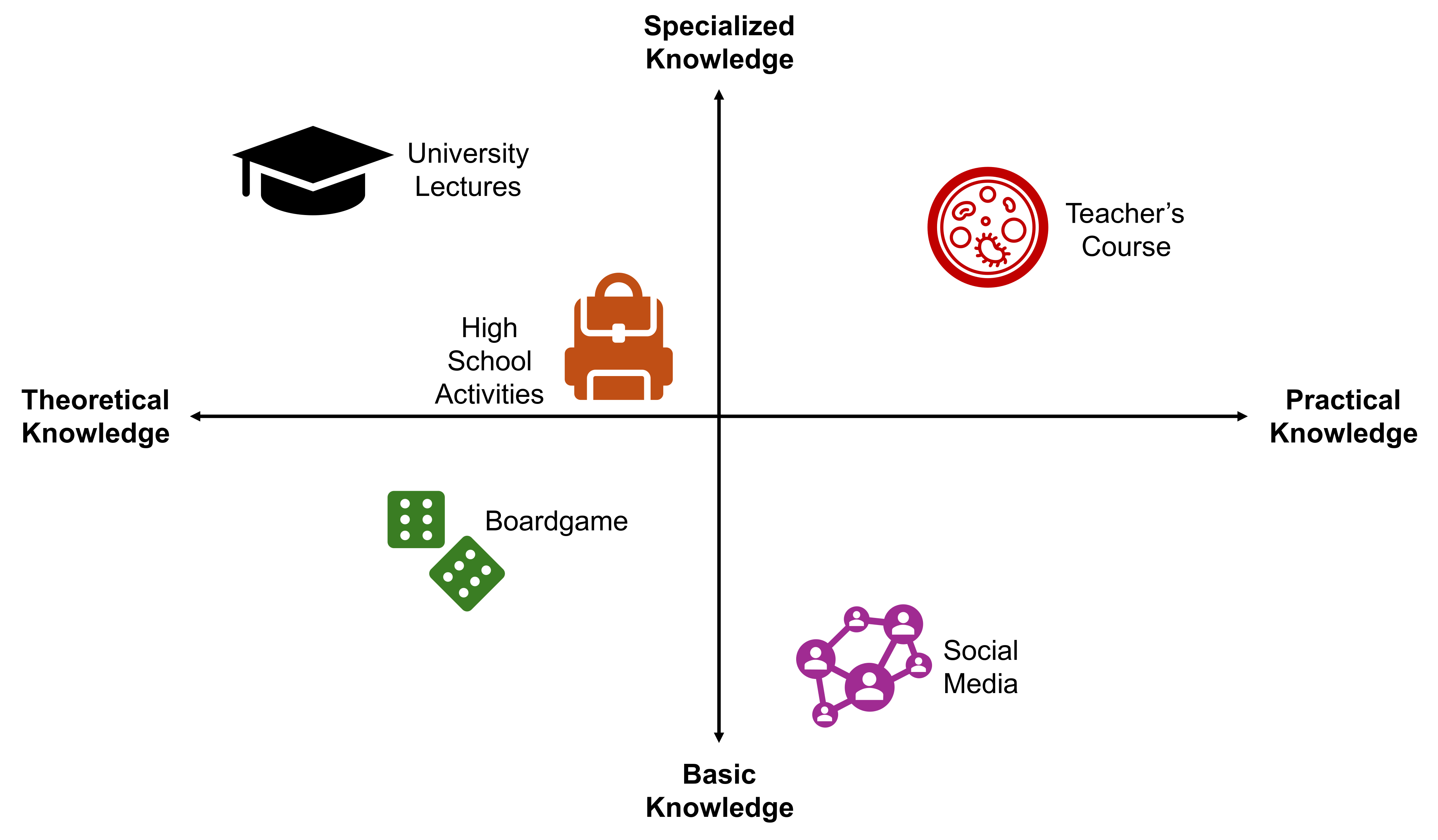
We are proud of how we tailored the activities based on our target to maximize the impact of our limited time. Not only boring frontal lectures, we wanted to demonstrate that biology is fun! Based on the audience, we managed to calibrate the level of theoretical complexity and abstract notions, and/or practical and playful activities, to perfectly match the needs of the public.
Figure. Summary of our educational activities tailored to different target audiences.
To organize the activities for the students, we closely collaborated with their teachers and professors, taking advantage of their professional knowledge on teaching and communication. DIY is fine, but we prefer to learn from the best whenever possible.
Available Materials
All the materials we used for all of our activities are freely available in each section and 99% of them have been translated also to English, so feel free to use them! Maybe cite us, but we would be more than glad to know we have helped to construct good-quality educational activities.
Satisfaction Surveys
Take a look at the results! Here is how we performed and how we can improve. We are very proud of the results, showing that our methods were effective.
All teachers filled in the survey. All students received the form, but not everyone filled it in. As we could not enforce the answer, out of 42 students only 22 completed the form. Therefore, we are aware that results might be affected by self-selection bias and/or non-response bias. However, the behavior observed and the opinions we gathered during the activities seem to confirm survey results.
Science teachers successfully got interested in synthetic biology and appreciated the structure of the course. Most importantly, they confirmed that they gained new topics, resources, and strategies they could use in their every-day teaching work. This is what we hoped to achieve: to be able to reach the students thanks to the teachers.
High school students did not know almost anything about synthetic biology prior to our meeting, but they still left curious to know more about it. We feared that the theoretical part could have been too heavy, since the topics were hidden and obscure for most of them. However, they reassured us on that – one answer actually suggested to talk more about it. Our boardgame was the real star of the event, being widely appreciated and warmly welcomed as an unconventional educational tool.
We highly value our participants' privacy and we made sure that all participants were informed on the use of their personal information. They were asked to fill in a release form, which was built using the European GDPR (General Data Protection Regulation) regulations and using the model given by Italian Garante della Privacy (Italian Data Authority Protection).
You can find the module also translated in English, but we cannot guarantee its validity outside Italy.




Social Outreach
We maintain profiles on the major social networks – Instagram (@bacman_igem) and TikTok (@bacmania). We believe they are useful tools to spread the word of synthetic biology in a friendly and catchy way, allowing us to reach a broad and probably inexperienced public. We don't want to just teach notions, but we want to make them entertaining. Synthetic biology and memes – we can do both!
Instagram
Why we choose Instagram?
Instagram is the most widely used social network among young people today. Major Italian newspapers such as La Repubblica, Il Post, and Corriere della Sera have opened media channels on the platform to share current news and report on events around the world. In the scientific field as well, journals like Nature and Science have built a large following. Beyond that, Instagram hosts a growing number of science communicators who have made social media their profession. In Italy, well-known examples include Barbascura and GeoPop, while internationally we can think of pages like Andrew Huberman and Jessie Inchauspé. As the data also shows, we believe this platform is one of the most effective ways to reach a broad audience, from young people to adults, allowing us to make ourselves known and to explain to the public what synthetic biology is.
Which strategy we adopt?
On social media, we mainly worked with three different types of content: reels, carousels, and themed stories. Since we started from scratch, in order to build visibility and grow our audience, we reached out to several Italian science communicators and UNIBO student groups with whom we planned shared posts. This strategy allowed us to reach a broader audience than our own while helping us grow at the same time.
The biggest strategy we built our communication on, however, was memes. We asked ourselves: how can we explain science to people outside our field? The answer is memes, as our advisor Stefano Bertacchi has taught us. Explaining science through humor and short, easy-to-digest content is the best way to bring the wider public closer to our field—and we are here to prove it!
Work done!
Reels
1) How much do you know about bioremediation?
A video created to answer public questions. It was based on a survey we shared about bioremediation, which revealed something striking: people are afraid of the word "GMO." And who better than us to explain what it really means?
2) What if bacteria could eat plastic?
A video made to introduce ourselves and our goals. It was not specifically about plastic, but everyone knows that click-bait titles are the best way to reach an audience. And who better than a science communicator to tell our story?
🤝 Collaboration with Marco Il Giallino
Public reactions:
3) How much do university students know about pollution?
A video designed to assess how much ordinary people really know about what we study. A fun and fast-paced format that, with just a few questions, helps explain the broad topic of bioremediation.
🤝 Collaboration with Oasi Felice
Carousels
1) Have you ever heard of Rhodococcus opacus?
A post created to explain the focus of our project. With just a few words, many images, and plenty of memes, concepts that might seem daunting to an external audience become much easier and more accessible!
🤝 Collaboration with Stefano Bertacchi
2) Have you ever heard of Bioinformatics?
A post dedicated to a growing field: bioinformatics! A highly demanded yet still unfamiliar expertise. We tried to present what this discipline means to us, between lines of code and complex metabolic pathways.
🤝 Collaboration with Stefano Bertacchi
Public reactions:
3) What is Synthetic Biology?
A post created to explain our world and that of iGEM—synthetic biology. In Italy, this discipline is still rarely practiced or taught, even in schools. Our goal: to make as many people as possible fall in love with this science, with which you can theoretically build any imaginable circuit.
🤝 Collaboration with Stefano Bertacchi
Stories
FORMAT: Thursday Science Pills
Keywords: Science – Updates
As a researcher, I often asked myself: how can I stay updated on the new studies published every week?
The simplest answers are: subscribe to a journal, search PubMed and filter for the latest papers.
But these are solutions known mainly to people already in the field. What if someone from outside wanted to stay informed in a simple and quick way? That's how Thursday Science Pills was born: a weekly story format where we share three of the most interesting international papers published during the week.
TikTok
Why we choose TikTok?
TikTok is the platform of young people—it's the app designed to gain visibility and entertain an audience. When we chose this communication channel, our idea was to interact with today's youth by explaining, in the simplest and most approachable way, what it means to take part in iGEM and what life in the lab is like.
Which strategy we adopt?
TikTok is a social platform that requires continuity, which is why we created a series of videos that either followed viral trends or used voiceovers to share parts of our daily life.
The goal? To bring as many people as possible closer to this world in a simple and entertaining way, because very often simplification is the key to reaching a wider audience.
Work done!
Here are just some of the videos that we shared on our pages. If you want to know more, follow us on TikTok @bacmania and Instagram @bacman_igem!