ON THIS PAGE
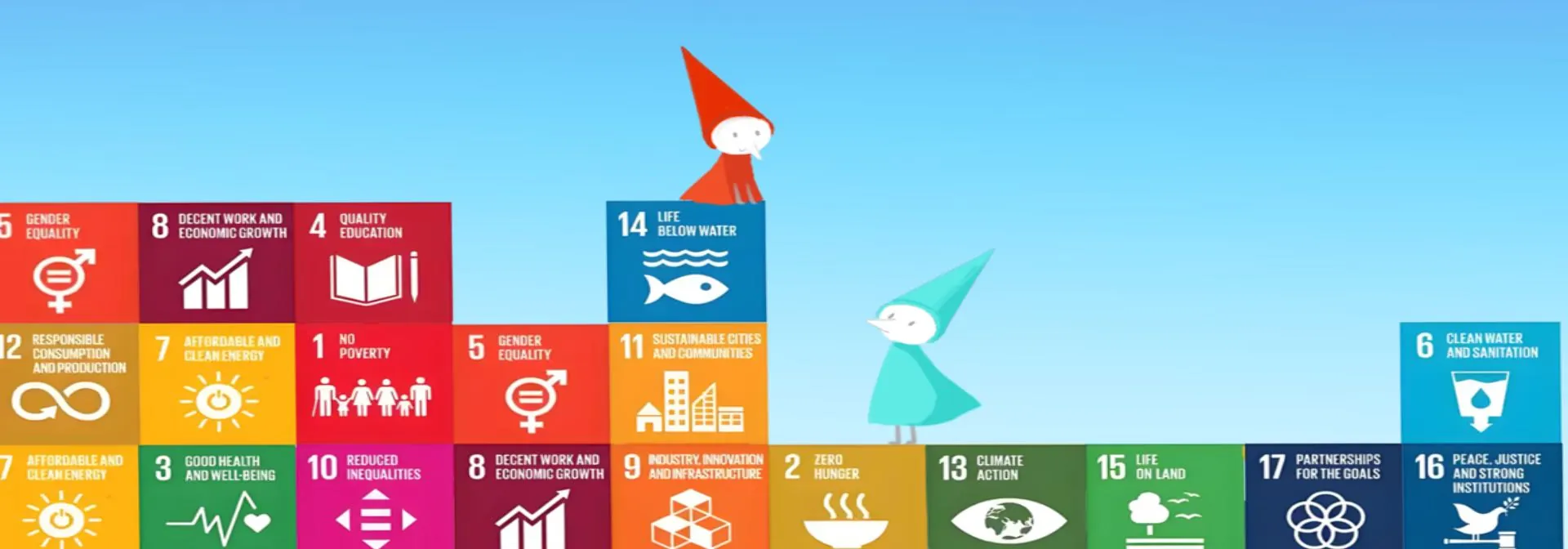
In today's society, medical aesthetics serves as a crucial means to enhance human well-being, boost residents' sense of happiness, and ultimately contribute to the achievement of Sustainable Development Goals (SDGs). However, due to factors such as high costs and scarcity of pharmaceutical ingredients, this industry remains inaccessible to the general public, and even leads to misunderstandings among some people. Therefore, our project aims to improve residents' perception of medical aesthetics, ensuring that everyone has the right to pursue beauty. The establishment of a cell factory using Escherichia coli (E. coli) for the high-efficiency production of astaxanthin is conducive to the realization of multiple SDGs, particularly SDG 3 (Good Health and Well-being). Meanwhile, during the process of translating our research into practical applications—such as developing facial masks using the astaxanthin produced in our experiments and conducting feasibility discussions with various stakeholders—we also promoted the advancement of SDG 9 (Industry, Innovation and Infrastructure) and SDG 12 (Responsible Consumption and Production). Through these discussions and collaborations, we have received valuable feedback and suggestions, which have deepened our understanding of the potential challenges in the medical aesthetics field. These exchanges not only helped us optimize our project but also laid a foundation for the future expansion of sustainable development initiatives.
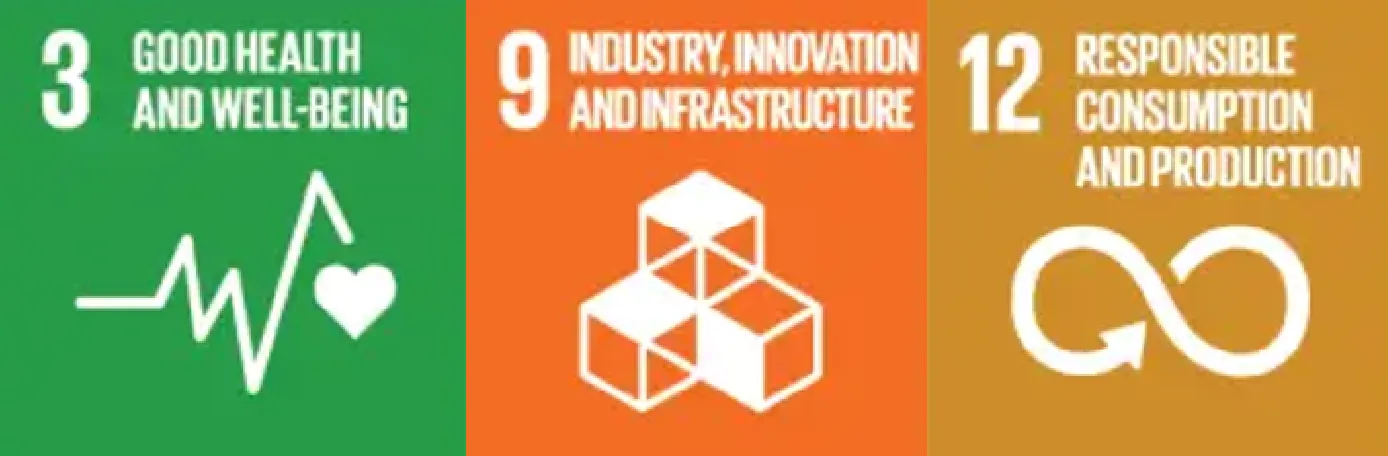 Figure 1. The SDGs we chose
SDG 3: Good Health and Well-being
As a potent antioxidant, astaxanthin’s application in medical aesthetics directly contributes to human health. In the medical field, astaxanthin can delay photoaging of the skin by scavenging free radicals, promote collagen synthesis, and improve skin elasticity and hyperpigmentation issues. Synthetic biology technologies ensure the stable supply of high-purity astaxanthin—its antioxidant capacity is 500 times stronger than that of vitamin E and 6,000 times stronger than that of vitamin C—providing a safer and more effective ingredient option for medical aesthetic products [1,2].
Our project utilizes E. coli to construct a high-efficiency cell factory for astaxanthin synthesis. On this basis, we have further optimized the system to make our astaxanthin products more efficient, stable, and affordable.
During discussions with professors, we upgraded the cell factory from a single-promoter system to a T7 dual-promoter system, conducted directed engineering of key enzymes to enhance synthesis rate, and improved astaxanthin extraction methods. Through communications with hospitals, we expanded our product portfolio beyond facial masks to include cosmetic formulations (e.g., makeup products), allowing us to enter the market in a more scientific and effective manner and better contribute to public health and well-being.
Additionally, we conducted extensive public opinion surveys on pricing to ensure our products are more accessible to ordinary households. We also consulted relevant professionals in the surrounding area to learn knowledge related to product marketing.
SDG 9: Industry, Innovation and Infrastructure
The application of synthetic biology in astaxanthin production has driven the upgrading of biomanufacturing enterprises. Simultaneously, it has reduced the costs of traditional production and promoted increased productivity. This technological breakthrough not only enhances the competitiveness of enterprises but also drives the development of upstream and downstream industrial chains (e.g., fermentation equipment and gene editing tools).
SDG 12: Responsible Consumption and Production
Synthetic biology technologies have significantly optimized the astaxanthin production process. Traditional production methods rely on outdoor cultivation of Haematococcus pluvialis or chemical synthesis, which suffer from unstable productivity, high resource consumption, difficult extraction, and potential toxin contamination [3,4]. In contrast, the synthetic biology approach—using E. coli to establish a cell factory—enables precise regulation of metabolic pathways, thereby reducing the consumption of land, water resources, and energy.
Practical and implemented measures in our project—such as optimizing production pathways, reducing resource consumption, and addressing toxin issues—all reflect our adherence to the principles of SDG 12: Responsible Consumption and Production.
[1] Shah M. R., Liang Y., Cheng J. J., Daroch M. Astaxanthin-producing green microalga Haematococcus pluvialis: from single cell to high value commercial products. Frontiers in Plant Science, 2016, 7:531
[2] Higuera-Ciapara I., Félix-Valenzuela L., Goycoolea F. M. Astaxanthin: a review of its chemistry and applications. Critical Reviews in Food Science and Nutrition, 2006, 46(2):185-196.
[3] Stachowiak B., Szulc P. Astaxanthin for the food industry. Molecules, 2021, 26(9):2666.
[4] Jiang W., Deng X., Qin L., Jiang D., Lu M., Chen K., et al. Research on the cell wall breaking and subcritical extraction of astaxanthin from Phaffia rhodozyma. Molecules, 2024, 29:4201.